





What's Happening?
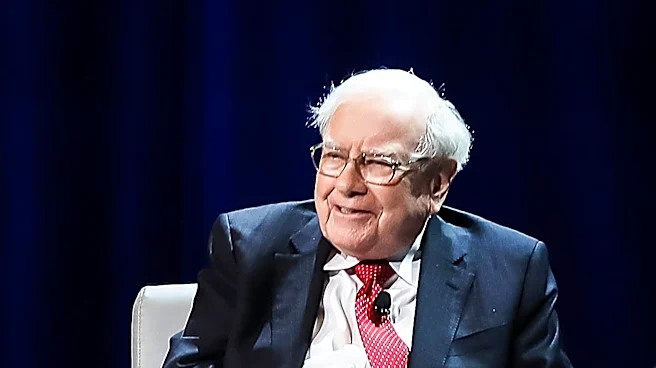
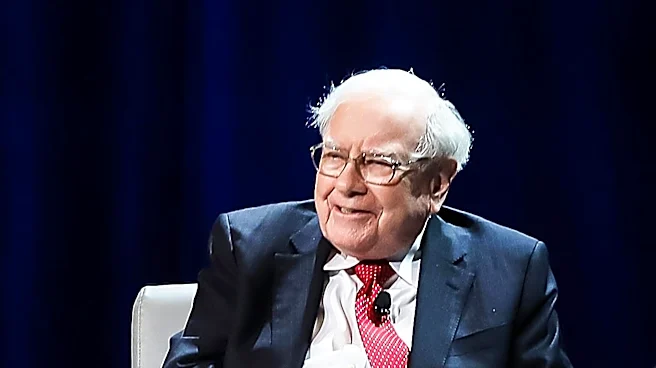
Warren Buffett, the 96-year-old business icon, has recently demonstrated his characteristic approach to legacy management through significant philanthropic donations and prudent investment strategies. He announced a donation of $5.5 billion worth of Berkshire
Hathaway stock to four of his family's foundations, bringing his total contributions for the year to approximately $11.4 billion. This move aligns with his stated plan to increase annual grants, aiming for his three children to distribute his remaining Berkshire fortune, valued over $155 billion, by the end of 2034. Concurrently, Berkshire Hathaway's third-quarter earnings report and portfolio update reflected a steady investment strategy. The company, now led by Greg Abel with Buffett's consultation on major decisions, engaged in minimal stock trading, buying $2.4 billion and selling $2.8 billion. Notably, Berkshire repurchased a record $9.6 billion of its own stock, a strategy reinstated by Abel in March with Buffett's approval, signaling confidence in the company's valuation and future under Abel's leadership. The company also maintained its core holdings in major companies like Apple, Coca-Cola, American Express, and Moody's, while slightly trimming stakes in Bank of America and Capital One.
Why It's Important?
Buffett's recent actions underscore a deliberate and carefully managed transition of wealth and leadership, which has significant implications for the philanthropic sector and the investment community. His substantial donations reinforce his commitment to charitable giving, setting a precedent for large-scale wealth distribution and potentially influencing other high-net-worth individuals. For Berkshire Hathaway shareholders, the continued adherence to Buffett's long-term, value-oriented investment philosophy, even under Greg Abel's operational leadership, provides stability and predictability. The record stock buybacks signal strong internal confidence in Berkshire's intrinsic value, which can bolster investor sentiment and potentially drive stock performance. The consistent holding of core investments like Apple and Coca-Cola also reaffirms the enduring value of these companies in a diversified portfolio, offering a model for long-term investors. This strategic continuity aims to preserve Buffett's legacy of prudent investing and responsible wealth management, ensuring that his principles continue to guide one of the world's largest conglomerates.
What's Next?
Looking ahead, the investment community will closely monitor how Greg Abel continues to manage Berkshire Hathaway's vast portfolio, particularly as Buffett gradually steps back from direct involvement. While Abel has demonstrated adherence to Buffett's core strategies, any future shifts in investment focus or significant acquisitions will be scrutinized for their alignment with the established philosophy. The ongoing distribution of Buffett's wealth through his family foundations will also be a key area of observation, as it progresses towards the 2034 target. This process could influence philanthropic trends and the operational strategies of the recipient foundations. Furthermore, Berkshire's continued stock buyback program will be watched as an indicator of management's perception of the company's valuation and its capital allocation priorities. The market will also be keen to see if Berkshire's steady, long-term approach continues to outperform broader market indices, especially given the current economic climate.
Beyond the Headlines
Beyond the immediate financial implications, Buffett's recent actions reflect a broader narrative about the responsibilities of extreme wealth and the deliberate crafting of a legacy. His emphasis on kindness and gratitude in his Thanksgiving letter, alongside his substantial donations, highlights a shift towards a more public-facing role as a moral compass in business, moving away from political commentary. This approach could influence corporate leaders to consider their broader societal impact beyond financial returns. The seamless transition of investment philosophy from Buffett to Abel also speaks to the importance of succession planning in large organizations, demonstrating how deeply ingrained principles can be maintained across leadership changes. This strategic continuity is not just about financial performance but also about preserving an organizational culture and ethical framework that has defined Berkshire Hathaway for decades. The long-term plan for wealth distribution also raises questions about intergenerational wealth transfer and the role of family foundations in shaping future philanthropic landscapes.