






What's Happening?
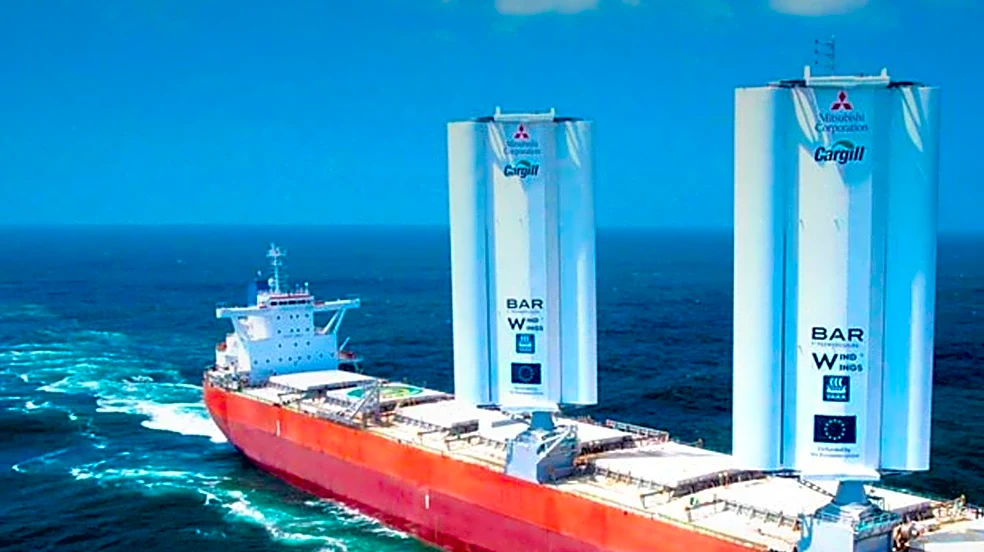
The 'Spirit of Toulouse,' the first of three pioneering RoRo (Roll-on/Roll-off) vessels designed for Airbus, has been fitted with six Norsepower Rotor Sails, marking a significant milestone in its construction. This vessel, built in China, is now the largest
RoRo vessel equipped with wind-assisted propulsion and features the highest number of mechanical sails on a single ship. The six rotor sails, each measuring 35 meters by 5 meters, are paired with two dual-fuel main engines and two dual-fuel generator sets capable of running on e-methanol, bio-methanol, or marine diesel oil. LD Armateurs, the vessel's owner, expects each ship to achieve a 70% decrease in CO2 emissions annually compared to the two vessels currently used for Airbus's Atlantic operations. The 'Spirit of Toulouse' will be joined by sister ships 'Spirit of Mobile' and 'Spirit of Mirabel,' all under construction in China, to transport large aircraft sub-assemblies between Airbus sites in Europe and North America.
Why It's Important?
The integration of six rotor sails on the 'Spirit of Toulouse' represents a significant advancement in sustainable maritime transport, with direct implications for U.S. industries and environmental goals. As the vessel will transport Airbus components between Europe and North America, it directly impacts the transatlantic supply chain for a major aerospace manufacturer with a substantial U.S. presence. The projected 70% reduction in CO2 emissions aligns with global efforts to decarbonize shipping, which is crucial for mitigating climate change. This development could influence U.S. shipping companies and ports to explore and adopt similar wind-assisted propulsion technologies, potentially leading to investments in green shipping infrastructure and a reduction in the carbon footprint of goods transported to and from the U.S. It also highlights the growing demand for alternative fuels like e-methanol and bio-methanol, which could stimulate their production and distribution within the U.S. energy sector. Companies that embrace these innovations stand to gain from improved environmental compliance and potentially lower long-term operational costs.
What's Next?
Following the installation of all six rotor sails, the 'Spirit of Toulouse' will undergo comprehensive testing during its upcoming sea trials to confirm their performance and integration with onboard systems. Further optimization and fine-tuning will continue during its maiden voyage from China to France. Subsequently, the vessel will commence its operational duties, transporting Airbus components between Europe and North America. The sister ships, 'Spirit of Mobile' and 'Spirit of Mirabel,' are also under construction and will eventually join the fleet, expanding the wind-assisted propulsion capacity for Airbus's logistics. The success and efficiency of these vessels will be closely monitored by the maritime industry, potentially accelerating the adoption of similar technologies across various shipping segments globally, including those serving U.S. trade routes.
Beyond the Headlines
The 'Spirit of Toulouse' and its sister ships embody a deeper shift in industrial logistics towards environmental responsibility and technological innovation. The use of wind-assisted propulsion combined with dual-fuel engines capable of running on e-methanol and bio-methanol signifies a holistic approach to decarbonization, moving beyond incremental improvements. This development raises ethical questions about the responsibility of large corporations to lead in sustainable practices and the potential for technology to significantly reduce the environmental impact of global trade. Legally, the success of such vessels could pave the way for new international regulations and incentives for green shipping, impacting U.S. maritime law and trade policies. Culturally, it represents a growing societal expectation for industries to adopt sustainable solutions, potentially influencing consumer preferences and corporate branding. The long-term implications include a potential paradigm shift in how goods are transported globally, with a greater emphasis on energy efficiency and reduced emissions, ultimately contributing to a more sustainable future for international commerce.