






What's Happening?
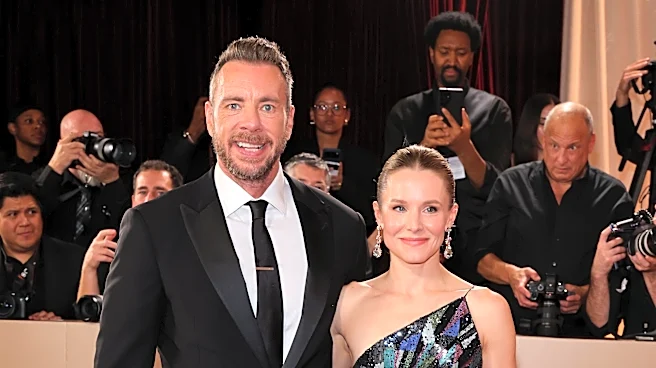
Dax Shepard, host of the 'Armchair Expert' podcast, has publicly disclosed his struggle with depression. This revelation comes as he addresses what he describes as 'offensive' claims suggesting he is abusive towards his wife, Kristen Bell. Shepard discussed
his current state on his podcast, noting that while he generally does not experience depression, he has been feeling tired and taking naps, which he jokingly referred to as a 'silver lining.' His co-host, Monica Padman, indicated that Shepard is currently experiencing depression due to a 'media storm' and a persistent narrative portraying him as an abusive husband. Shepard explained that this narrative originated from an anniversary post by Bell in October 2025, which was deemed 'tone deaf' for a joke about him not wanting to kill her, especially as it coincided with Domestic Violence Awareness Month. Subsequent comments from Cher on his podcast and Shepard's own description of his flirting style further fueled these rumors.
Why It's Important?
This situation highlights the significant impact of public perception and social media narratives on individuals, particularly public figures. The 'offensive' claims of abuse, even if unfounded, have evidently contributed to Shepard's mental health struggles, underscoring the psychological toll of online scrutiny and misinformation. For public figures, managing personal narratives in the digital age is a constant challenge, where even lighthearted comments can be misconstrued and amplified. The incident also brings to light the broader issue of how domestic violence awareness campaigns can inadvertently become entangled with celebrity gossip, potentially diluting their intended message or misdirecting public attention. The ongoing discussion around Shepard's marriage and mental health could influence public discourse on celebrity privacy, mental well-being, and the responsibilities of media consumption.
What's Next?
It is likely that Dax Shepard will continue to address these personal challenges and public perceptions on his 'Armchair Expert' podcast, given its format as a platform for candid discussions. His openness about depression may encourage further dialogue among his listeners about mental health. The ongoing 'media storm' could persist, with public and media reactions continuing to shape the narrative surrounding Shepard and Kristen Bell's relationship. It remains to be seen if Bell will publicly comment further on the situation or if the couple will take additional steps to counter the 'abusive husband' narrative. The situation may also prompt discussions within the entertainment industry about how celebrities navigate personal disclosures and manage public image in an era of heightened social media scrutiny.
Beyond the Headlines
Beyond the immediate headlines, this event touches upon deeper societal issues concerning the nature of public discourse and the rapid spread of information, or misinformation, online. The ease with which a 'weird narrative' can take hold and impact an individual's mental health raises questions about accountability in digital spaces. It also underscores the double-edged sword of celebrity candidness; while sharing personal stories can foster connection, it also opens individuals up to intense public judgment and misinterpretation. The incident could serve as a case study for media ethics, examining the responsibility of outlets and individuals in perpetuating narratives that can have real-world consequences on mental well-being. Furthermore, it highlights the ongoing challenge of distinguishing between genuine concerns about domestic issues and speculative gossip, particularly when public figures are involved.