



What's Happening?
The Atlanta Falcons made a significant move at the 2026 NFL trade deadline by sending starting center Ryan Neuzil to the Baltimore Ravens. In return, the Falcons acquired guard Andrew Vorhees and a 2028 sixth-round pick. This trade provided the Ravens with
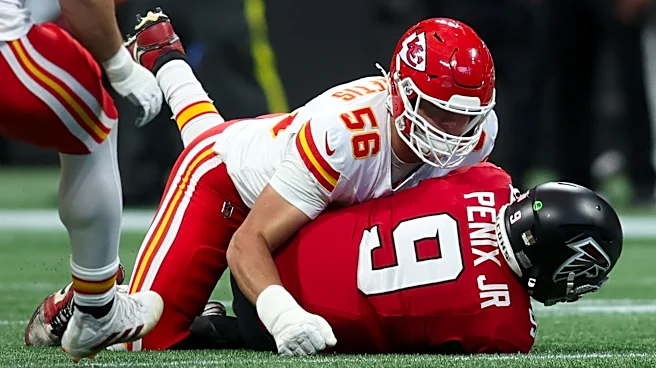
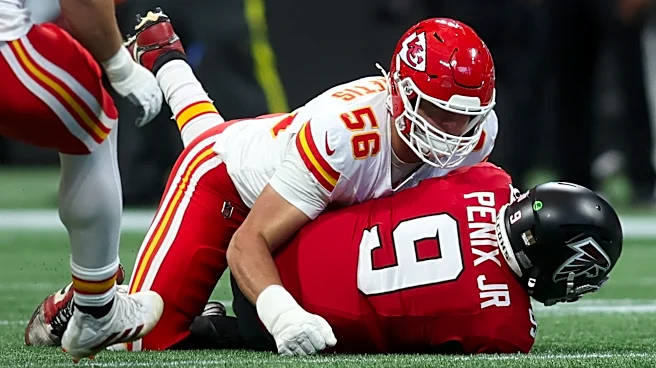
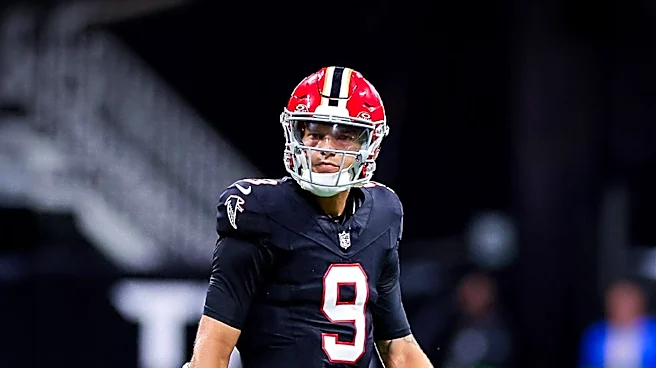
an experienced interior lineman, but it left the Falcons needing to replace a key starter at a position directly impacting their quarterback's performance. According to the source, this decision is particularly problematic for a team still evaluating its quarterback, Michael Penix Jr. Neuzil had been a consistent presence, starting 38 career games, including every game over the previous two seasons. His departure introduces uncertainty into the offensive line, with Corey Levin, who has only seven career starts, now expected to fill the role. The trade is viewed as creating an unnecessary complication for Penix's development, as stability in protection is crucial for assessing a quarterback's true capabilities.
Why It's Important?
This trade is important because it directly impacts the Atlanta Falcons' long-term strategy and the development of their potential franchise quarterback, Michael Penix Jr. The stability of the offensive line, particularly the center position, is critical for a quarterback's performance and growth. By trading an established starter like Neuzil for a modest return, the Falcons have introduced an element of uncertainty into Penix's protection. This could make it more difficult to accurately evaluate Penix's abilities, as any struggles might be attributed to the disrupted offensive line rather than his own performance. For a team that is not currently a playoff contender and is focused on building for the future, prioritizing the quarterback's development should be paramount. The decision to disrupt this crucial aspect of the offense for a relatively low-value draft pick and a player who is also nearing free agency in 2027, suggests a misstep in roster management that could have lasting consequences for the team's future success.
What's Next?
The immediate consequence for the Atlanta Falcons is the need to integrate Corey Levin into the starting center role and assess his performance. The team will have to determine if Levin can provide the necessary stability for Michael Penix Jr. to continue his development effectively. If Penix struggles, the coaching staff will face the challenge of discerning whether the issues stem from his play, the offensive line's adjustments, or a combination of both. The long-term implications will depend on Penix's performance under these new conditions and whether the acquired assets, Andrew Vorhees and the 2028 sixth-round pick, ultimately provide significant value. The Falcons will need to carefully manage their roster and future draft capital to ensure they are building a cohesive and competitive team around their young quarterback, despite the immediate disruption caused by this trade.
Beyond the Headlines
Beyond the immediate impact on the Falcons' offensive line, this trade highlights a broader challenge in NFL team management: balancing immediate needs with long-term strategic goals, especially concerning quarterback development. The decision to trade a starting center, a position vital for offensive cohesion and quarterback protection, for a relatively minor return, suggests a potential miscalculation in prioritizing assets. It raises questions about the team's commitment to creating an optimal environment for its young quarterback to succeed. This move could be seen as a gamble that, if unsuccessful, might delay Penix's progress and potentially impact the team's ability to attract and retain talent in the future. The ethical dimension lies in whether the organization is truly acting in the best interest of its developing players by introducing avoidable instability, or if it is making short-sighted decisions that could hinder long-term success.