







What's Happening?
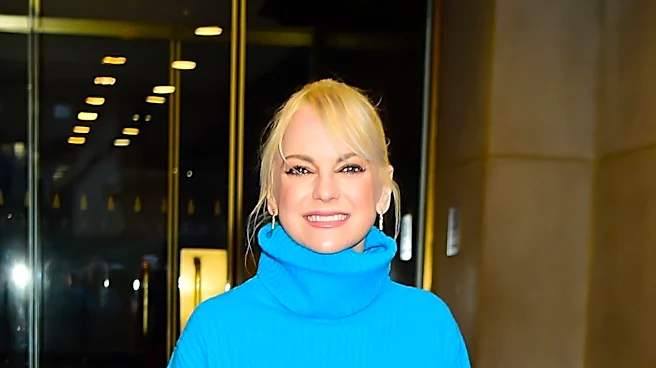
French Stewart, who played Chef Rudy on the CBS comedy 'Mom,' has publicly defended his former co-star Anna Faris following critical remarks made by co-creator Chuck Lorre in his memoir, 'Sitcom.' Stewart posted on Instagram, calling Faris 'the spine
of the' series and one of his 'all time favorite co-stars,' describing her as 'funny, kind [and] prepared.' He expressed his dismay at Lorre's comments, stating it was 'dishearten[ing] to see Chuck Lorre throw her under the television bus.' Lorre's memoir, released October 13, indicated he felt vindicated by Faris's 2020 exit from the show after seven seasons, suggesting his initial reluctance to hire her was correct. Another 'Mom' co-star, George Paez, also supported Faris, recalling her kindness on set. Faris herself responded to Lorre's remarks via Instagram Story, admitting they 'hurt' but expressing gratitude for her time on the show and highlighting her current sobriety and happiness.
Why It's Important?
This public disagreement highlights the often-complex dynamics between creators, actors, and production teams in the entertainment industry. Chuck Lorre's memoir offers a rare, unfiltered glimpse into the behind-the-scenes tensions that can arise during a show's production, particularly concerning casting and actor departures. The strong defense from Faris's co-stars, French Stewart and George Paez, underscores the personal impact of such public criticisms and reveals differing perspectives on Faris's professional conduct and contribution to the show. This situation could influence how future memoirs from industry figures are perceived, potentially encouraging more candid revelations but also risking public backlash and damage to professional relationships. For audiences, it provides insight into the human element behind beloved television series, reminding them that creative endeavors are often fraught with personal and professional challenges.
What's Next?
The public exchange between Chuck Lorre, Anna Faris, and her former co-stars may continue to unfold, potentially leading to further comments from other cast or crew members of 'Mom.' While Faris has expressed her feelings and moved on, the controversy could impact future collaborations or public perceptions of those involved. Lorre's memoir, now under increased scrutiny, might see a surge in interest as readers seek out the specific passages concerning Faris. For Faris, the public support from her colleagues could reinforce her standing in the industry and among fans, potentially leading to new opportunities. The broader entertainment industry might also reflect on the implications of such candid memoirs, possibly influencing how personal accounts are shared and received in the future, balancing transparency with professional discretion.
Beyond the Headlines
This incident delves into deeper themes of professional reputation, personal struggles, and the power dynamics within Hollywood. Lorre's comments, made years after Faris's departure, raise questions about the ethics of revealing past professional judgments, especially when an individual has publicly shared their journey of recovery, as Faris has. The strong defense from her co-stars highlights the importance of on-set camaraderie and loyalty, contrasting with the hierarchical power often held by show creators. This situation also touches upon the public's perception of celebrity narratives, where personal struggles can become intertwined with professional evaluations. It underscores the ongoing conversation about mental health and addiction in the workplace, particularly in high-pressure environments like television production, and how past issues can be framed and re-evaluated years later, impacting an individual's legacy and public image.