


What's Happening?
The 1990s marked a pivotal decade where New York City transitioned from merely a backdrop for celebrity culture to becoming its central character, according to CelebNYC. Television shows like 'Seinfeld' (1989-1998) and 'Friends' (1994-2004) popularized
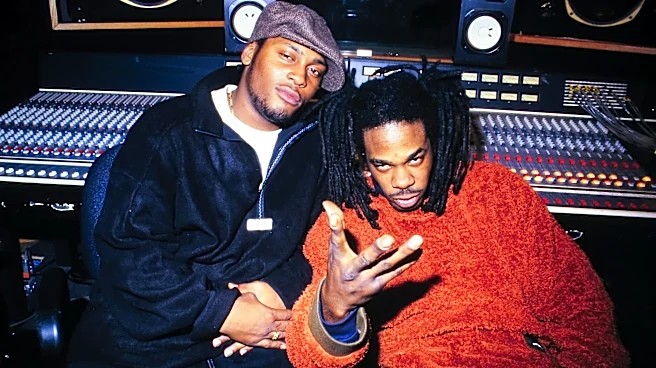
specific New York neighborhoods, but it was 'Sex and the City,' premiering in 1998, that most directly merged celebrity culture with the city's geography. This show transformed areas like the Meatpacking District, elevated shoe designers to celebrity status, and fostered a tourism economy centered around fictional characters' favorite spots. Concurrently, hip-hop, which originated in the city's outer boroughs in the late 1970s, achieved full cultural dominance. Artists like The Notorious B.I.G. from Brooklyn, Sean "Puffy" Combs with Bad Boy Records, and Jay-Z with Roc-A-Fella Records, emerged from these boroughs, establishing themselves as powerful figures in entertainment and merging music, fashion, and lifestyle branding.
Why It's Important?
This cultural explosion in the 1990s had a profound and lasting impact on New York City's identity, economy, and global perception. The fusion of celebrity and urban geography created a unique brand for the city, attracting tourists and influencing trends in fashion, dining, and entertainment. The rise of hip-hop from the outer boroughs not only diversified the city's cultural landscape but also demonstrated the economic and social power of previously marginalized communities. This era laid the groundwork for the 'influencer economy' by showcasing how music, fashion, and lifestyle could be integrated into powerful brands. For U.S. industries, particularly tourism, entertainment, and retail, this period illustrated the immense value of cultural phenomena in driving economic activity and shaping consumer behavior, solidifying New York City's status as a global cultural capital.
What's Next?
The legacy of the 1990s cultural boom continues to influence New York City's development and its role in global culture. The established connection between celebrity and urban spaces remains a significant draw for tourism and real estate, with neighborhoods and establishments gaining prestige through association with famous figures. The blueprint for integrating music, fashion, and lifestyle branding, pioneered by figures like Sean "Puffy" Combs, continues to be a dominant model in the entertainment and marketing industries. Future trends will likely see continued evolution of how digital platforms and new forms of media further intertwine celebrity, urban identity, and economic activity, building upon the foundations laid in this transformative decade. The ongoing gentrification and cultural shifts in the outer boroughs also reflect the long-term impact of their rise to cultural prominence.
Beyond the Headlines
The phenomenon described highlights the powerful interplay between media, urban development, and cultural identity. It demonstrates how popular culture can not only reflect but actively shape the physical and economic landscape of a city. The elevation of specific neighborhoods and the creation of a tourism economy around fictional narratives raise questions about authenticity and the commodification of urban experience. Furthermore, the emergence of hip-hop as a dominant cultural force from the outer boroughs signifies a crucial shift in power dynamics, challenging traditional centers of influence and giving voice to diverse communities. This period underscores how cultural movements can drive significant social and economic transformation, influencing everything from urban planning to global perceptions of a city.