
What's Happening?
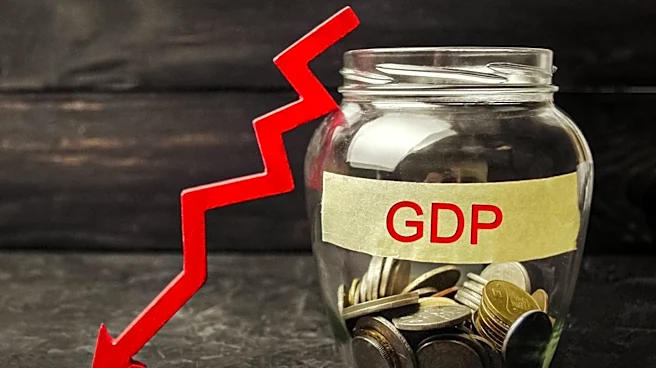
The U.S. stock market experienced gains as a weaker-than-expected July jobs report eased concerns about potential interest rate hikes by the Federal Reserve. Nonfarm payrolls fell by 23,000, leading to a decrease
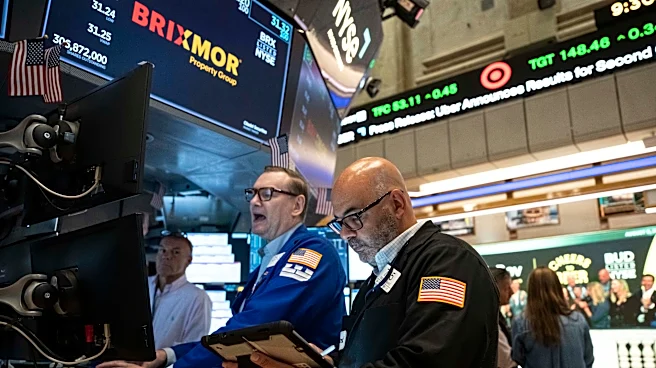
in Treasury yields and a weaker U.S. dollar. This development has shifted market expectations, with traders now predicting a 55% probability that the Fed will hold rates unchanged at its September meeting. The S&P 500 and Nasdaq both saw significant increases, with the S&P 500 up 3.5% for the week, marking its best performance since April.
Why It's Important?
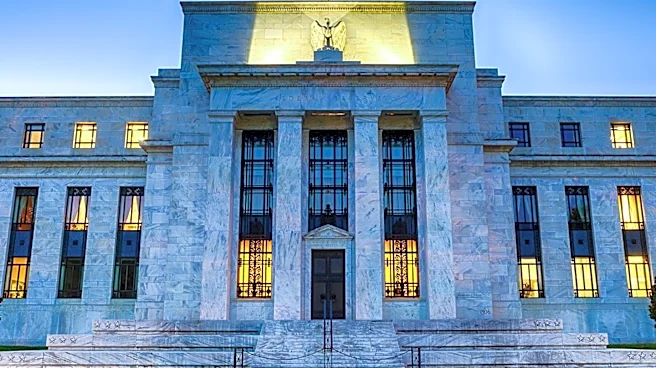
The unexpected decline in nonfarm payrolls has significant implications for U.S. monetary policy and economic outlook. A weaker jobs report suggests a cooling labor market, which could alleviate inflationary pressures and reduce the likelihood of further interest rate hikes. This scenario is favorable for stock markets, as lower interest rates typically boost equity valuations. The shift in market sentiment reflects broader economic uncertainties and highlights the delicate balance the Federal Reserve must maintain in its policy decisions.
What's Next?
Investors will be closely monitoring upcoming economic data, including the Consumer Price Index (CPI) report, to gauge inflation trends and potential Fed actions. The Federal Reserve's next moves will be critical in shaping market dynamics, with any indications of policy shifts likely to influence investor behavior. Additionally, the ongoing discussions between the U.S. and Canada on tariff relief could impact trade relations and economic forecasts.