


What's Happening?
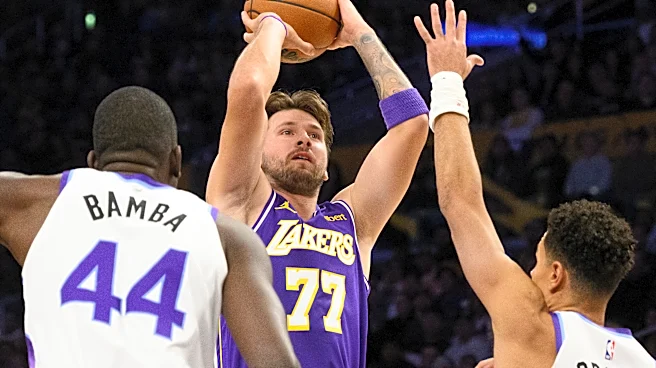
The Los Angeles Lakers' new ownership group, led by Bob Iger and Josh Kushner, is facing significant criticism from fans following the announcement of a partnership with Kalshi, a federally regulated prediction market platform. The sponsorship deal was
unveiled during a home game against the Utah Jazz, coinciding with Iger and Kushner's first game attendance alongside governor Jeanie Buss since their $12.5 billion purchase agreement. The Lakers' statement confirmed Kalshi as the team's Official Prediction Market Sponsor, allowing users to trade on the outcome of future events. This move has drawn negative reactions from fans, who perceive it similarly to traditional sports betting, especially amid recent gambling controversies within the NBA. Lon Rosen, President and Chief Business Officer of the Los Angeles Lakers, expressed excitement about the partnership, stating it would explore innovative ways to engage fans and strengthen their connection to the game. Kalshi's Head of Sports Partnerships, Adam Barrick, also called the partnership an 'incredible milestone.'
Why It's Important?
This development is important because it highlights the growing tension between professional sports leagues' pursuit of new revenue streams and fan sentiment regarding the integrity of the game, particularly concerning gambling. The backlash against the Lakers' partnership with Kalshi underscores a broader public sensitivity to prediction markets and sports betting, which fans often view as detrimental to the sport's authenticity. The NBA has been navigating increased scrutiny over gambling, with previous controversies involving player equity stakes in such platforms, like Giannis Antetokounmpo's investment in Kalshi. This deal could set a precedent for how other sports franchises approach similar partnerships, potentially influencing future league-wide policies on prediction market sponsorships. The financial implications for the Lakers are significant, as these partnerships represent substantial revenue, but the reputational cost due to fan disapproval could be considerable, impacting fan engagement and loyalty.
What's Next?
The immediate future will likely see continued fan reactions and discussions surrounding the Lakers' partnership with Kalshi. The NBA and its teams may need to address these concerns, potentially leading to further clarification of policies regarding prediction market sponsorships. Other NBA franchises, such as the Philadelphia 76ers and Atlanta Hawks, have also engaged in similar partnerships, suggesting a trend that could either be reinforced or re-evaluated based on the Lakers' experience. The ongoing legal challenges against prediction markets could also influence the longevity and structure of such deals. Stakeholders, including team owners, league officials, and fan groups, will be closely monitoring the situation to assess the long-term impact on team branding, fan relations, and the broader sports betting landscape. The league may face pressure to balance financial opportunities with maintaining public trust and addressing ethical considerations related to gambling.
Beyond the Headlines
Beyond the immediate financial and fan-related implications, this partnership touches upon deeper ethical and regulatory questions surrounding the convergence of sports and financial markets. While Kalshi operates as a federally regulated financial exchange, its perception among fans as akin to sports betting raises concerns about potential conflicts of interest and the integrity of athletic competitions. The involvement of prominent figures like Bob Iger and Josh Kushner in such a deal also brings increased scrutiny to the decision-making processes within major sports franchises. This trend could lead to a re-evaluation of how sports leagues define and regulate partnerships with prediction market platforms, potentially influencing legislative efforts to control or expand such activities. The incident also highlights the evolving nature of fan engagement, where financial transactions and speculative markets are increasingly intertwined with the emotional investment fans have in their teams, posing challenges for maintaining traditional sportsmanship values.