





What's Happening?
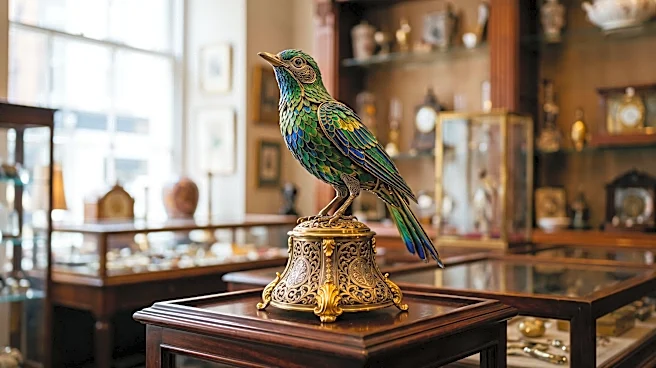
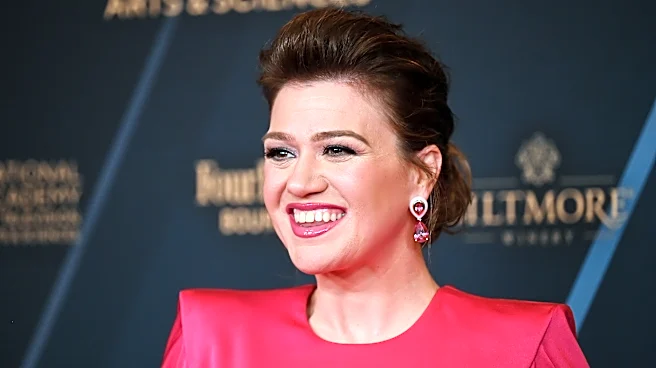
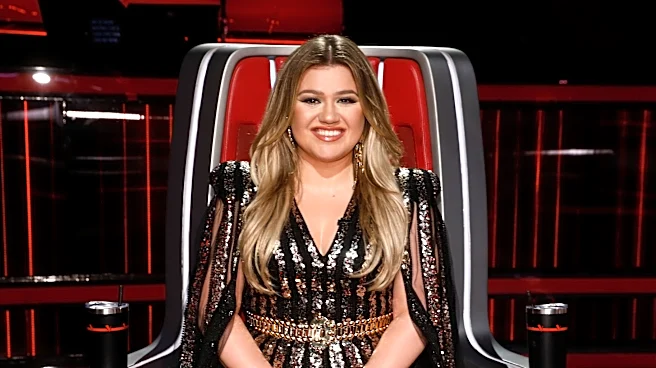
Pop star Kelly Clarkson has ignited a viral social media feud with Art of Play, a Brooklyn novelty boutique, following a weekend visit. Clarkson claims she experienced condescending treatment from an employee when inquiring about a mechanical singing
bird named 'Molly,' which had a $15,000 price tag. According to Clarkson, the employee gave her an 'elevator eye' and suggested finding something 'comparable' as if she couldn't afford the item, reminiscent of a scene from the movie 'Pretty Woman.' The boutique, however, disputes Clarkson's account, stating that 'Molly' is a permanent fixture and mascot for their magic shows, not for sale. Art of Play claims they explained that a twin automaton could be commissioned from the artist for $15,000 and offered to show Clarkson a different, less expensive automaton, but she did not stay. Clarkson later doubled down on her claims, posting a screenshot of a video showing the $15,000 price tag next to the bird, accusing the store of lying and changing their narrative. The store expressed shock at the backlash and stated they had reached out to Clarkson privately to clarify the misunderstanding.
Why It's Important?
This viral dispute between a celebrity and a small business highlights several significant issues. Firstly, it underscores the power of social media in shaping public perception and the immediate impact a celebrity's post can have on a business, regardless of the full context. The 'Pretty Woman' analogy resonates with many, tapping into broader societal concerns about classism and discriminatory treatment in retail. For small businesses like Art of Play, such public accusations can lead to significant reputational damage and financial repercussions, even if their account differs. This incident also brings to light the challenges businesses face in managing customer interactions, especially when dealing with high-profile individuals. It raises questions about customer service standards, the interpretation of interactions, and the responsibility of public figures when sharing negative experiences online. The feud could influence consumer behavior, encouraging more scrutiny of customer service practices and potentially leading to increased caution from businesses when interacting with well-known personalities. It also serves as a case study on how quickly a localized disagreement can escalate into a national conversation due to social media.
What's Next?
The immediate aftermath of the feud will likely involve continued public discussion and scrutiny of both Kelly Clarkson's and Art of Play's accounts. The boutique has already expressed its shock and attempted to clarify its position, and it may continue to do so to mitigate reputational damage. Clarkson's decision to double down with video evidence suggests she is unlikely to retract her statements, potentially prolonging the public debate. This incident could lead to increased media attention on both parties, with potential interviews or further social media exchanges. For Art of Play, the challenge will be to rebuild trust and manage the negative publicity, possibly through transparent communication and emphasizing their commitment to customer service. For Clarkson, the incident may reinforce her image as an advocate against perceived injustices, but it could also draw criticism regarding the impact of her platform on small businesses. The broader retail industry might also take note, potentially reviewing their customer service training to avoid similar public disputes.
Beyond the Headlines
Beyond the immediate celebrity-small business spat, this incident touches upon deeper cultural and economic implications. It reflects a growing public sensitivity to perceived class-based discrimination and the expectation of equitable treatment, regardless of appearance or perceived wealth. The 'Pretty Woman' reference is potent because it symbolizes a common fear of being judged and dismissed based on superficial factors. This event could contribute to a broader conversation about consumer rights, ethical business practices, and the role of empathy in commercial interactions. It also highlights the double-edged sword of social media: while it empowers individuals to voice grievances and hold businesses accountable, it also allows for rapid, widespread dissemination of potentially unverified or one-sided narratives, which can disproportionately harm smaller entities. The incident may encourage businesses to be more proactive in documenting interactions or implementing clearer policies to prevent misunderstandings, while also prompting celebrities to consider the immense power of their platforms and the potential consequences of their public statements.