


What's Happening?
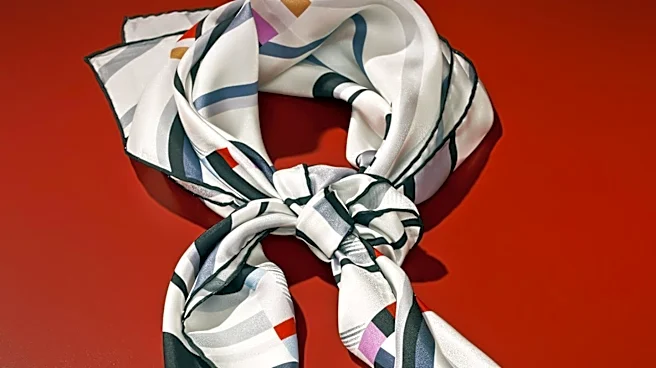
The silk scarf is experiencing a significant revival in fashion, driven by a broader trend towards self-expression and personalization among consumers. Designers such as Celine, Givenchy, Dries Van Noten, Area, Hermès, and Chanel are reinterpreting the
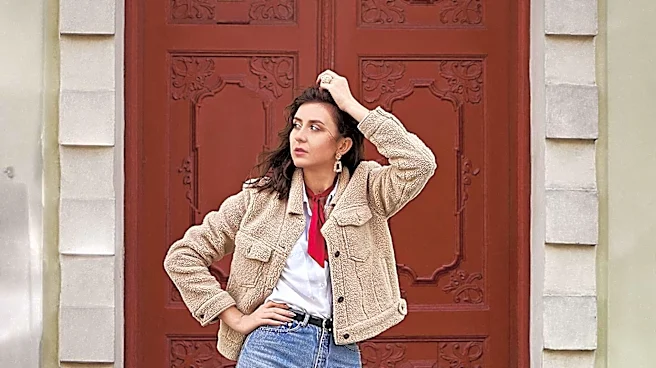
accessory through unconventional styling, while celebrities like Alexa Chung and Jennifer Lawrence are showcasing its versatility in everyday wear. This resurgence is attributed to consumers' desire for fashion items that allow for individual interpretation and creativity, rather than dictating a specific style. The appeal of the silk scarf lies in its combination of heritage and adaptability, offering numerous ways to be styled—around the neck, as a cummerbund, incorporated into garments, or as a head covering. This trend indicates a shift where consumers are actively participating in defining their final look, valuing products that offer flexibility and room for personal expression over rigidly prescribed aesthetics.
Why It's Important?
This trend signifies a fundamental shift in consumer behavior within the U.S. fashion industry, moving away from dictated trends towards a greater emphasis on individual creativity and personalization. For brands, this means that products offering versatility and opportunities for consumer involvement in styling will likely see increased engagement and value. The revival of the silk scarf demonstrates that personalization doesn't always require custom manufacturing; instead, it can be achieved when products provide enough flexibility for consumers to interpret and adapt them. This has implications for product design, marketing strategies, and the overall value proposition in the fashion market. Brands that can empower consumers to 'finish the idea themselves' by offering adaptable pieces are better positioned to resonate with the 'Creative Individualist' demographic, who seek to communicate personality and individual taste through their style. This shift could lead to a greater focus on accessories and modular clothing items that encourage experimentation.
What's Next?
The fashion industry is expected to continue adapting to this demand for self-expression and personalization. Brands may increasingly design products with versatility in mind, offering garments and accessories that can be wrapped, layered, adjusted, or styled in multiple ways. Marketing strategies will likely evolve to showcase diverse interpretations of products, featuring designers, creators, celebrities, and consumers demonstrating various styling possibilities. This approach aims to present products as invitations to experiment rather than fixed instructions. Furthermore, the emphasis on consumer creativity could lead to more interactive brand experiences, where customers are encouraged to share their unique styling ideas. The success of the silk scarf revival suggests that products with inherent 'viral potential'—those that lend themselves to tutorials, styling challenges, and before-and-after looks—will become increasingly valuable in a content-driven social media landscape. This trend also points towards a greater appreciation for vintage and collectible pieces that offer a sense of individuality.
Beyond the Headlines
The resurgence of the silk scarf reflects a deeper cultural movement towards authenticity and individual identity in an increasingly homogenized world. In an era where trend cycles are rapid and often feel dictated, consumers are seeking ways to differentiate themselves and express their unique personalities. This trend challenges the traditional top-down model of fashion, where designers solely dictate what is 'in style.' Instead, it empowers the consumer as an active co-creator of fashion, transforming the act of getting dressed into a form of personal artistry. This shift has ethical implications, as it encourages a more sustainable approach to fashion by promoting versatility and re-imagining existing pieces, potentially reducing the constant need for new purchases. It also highlights the psychological satisfaction derived from creative engagement with personal style, making fashion less about consumption and more about self-discovery and playful experimentation.