



What's Happening?
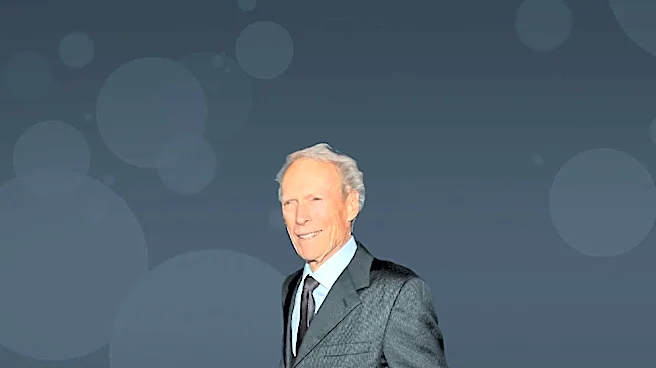
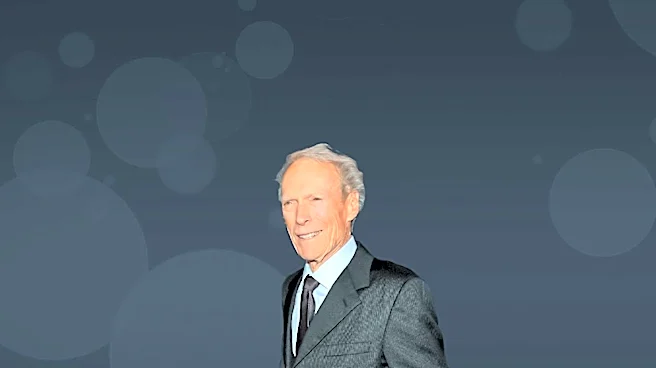
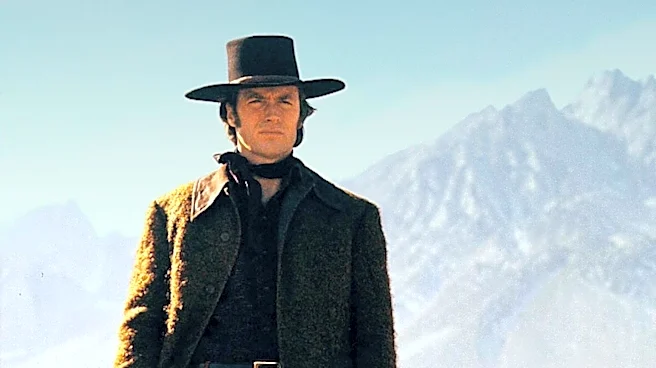
Clint Eastwood's 1973 film 'Breezy' is being re-examined as a significant departure from his more well-known directorial works, which often feature violence or intense themes. Unlike his earlier films such as 'Play Misty For Me' or 'High Plains Drifter,'
and his iconic 'Dirty Harry' series, 'Breezy' is a May-December romance that showcases a softer, more sensitive side of Eastwood's filmmaking. The movie stars Kay Lenz as Breezy, a cheerful flower child, and William Holden as Frank Harmon, a middle-aged, twice-divorced real estate agent. The narrative focuses on their unexpected romance, highlighting the clash and eventual understanding between their vastly different backgrounds and ages. Eastwood chose not to star in this film, a rare decision for him at the time, further emphasizing its unique position within his early directorial career. The film explores themes of mid-life crises and naive youth, presenting a love story that evolves at a deliberate pace, contrasting with the rapid, often violent, resolutions in his other works.
Why It's Important?
The re-evaluation of 'Breezy' is important for understanding the breadth and evolution of Clint Eastwood's directorial vision. It challenges the common perception of his early career being solely defined by violent or action-oriented films, revealing an early inclination towards more nuanced, character-driven dramas. This film demonstrates Eastwood's willingness to experiment with different genres and themes, even in the nascent stages of his directing career. For film enthusiasts and critics, 'Breezy' offers a crucial piece of the puzzle in tracing Eastwood's artistic development, showing how he explored mature and sensitive insights long before critically acclaimed works like 'The Bridges Of Madison County' or 'Unforgiven.' It highlights that his capacity for anti-violence messaging and complex emotional narratives was present much earlier than often acknowledged, influencing how his entire filmography is perceived and studied.
What's Next?
The renewed attention on 'Breezy' could lead to a broader re-appraisal of Clint Eastwood's early directorial efforts, potentially encouraging film scholars and audiences to delve deeper into his less-discussed works. This might result in more critical analyses and discussions about the thematic diversity present throughout his career, rather than focusing predominantly on his more commercially successful or genre-defining films. For streaming platforms and classic film channels, this could mean increased interest in featuring 'Breezy' and similar films, making them more accessible to a new generation of viewers. This re-discovery could also influence contemporary filmmakers, demonstrating that even directors known for specific styles can successfully venture into different narrative territories, fostering a more diverse and experimental approach to filmmaking.
Beyond the Headlines
The deeper implication of 'Breezy's' re-examination lies in its commentary on societal tolerance and generational divides, particularly relevant in the 1970s and still resonant today. The film subtly portrays the coexistence of different social groups—the 'hippies' and the 'white-collar professionals'—without overt conflict, suggesting a level of mutual tolerance that was perhaps aspirational for the era. This aspect of the film, where two disparate communities are shown to be tolerable of each other's existence, offers a nuanced perspective on social dynamics. Furthermore, the film's exploration of an age-gap romance, handled with sensitivity and without sensationalism, delves into the complexities of human connection and the search for love and respect across different life stages. It challenges conventional notions of relationships and societal expectations, providing a timeless reflection on personal independence and the foundations of love.