




What's Happening?
Chile's mining investment pipeline has reached a 13-year high, with projected investments totaling US$111.149 billion across 72 projects for the 2026–2035 period. This represents a 6.3% increase from the previous portfolio of US$104.549 billion and an addition
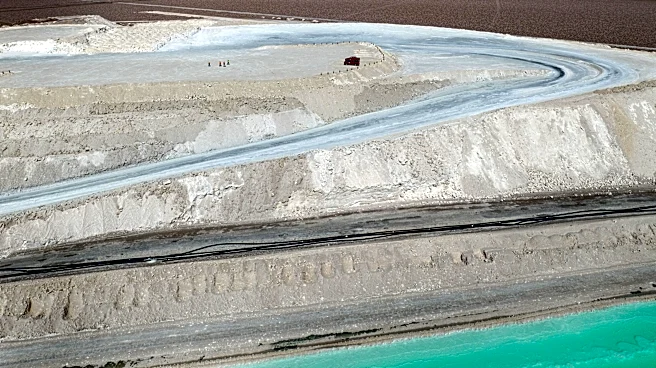
of 13 projects. The significant growth is primarily fueled by a surge in lithium spending, which more than doubled from US$4.7 billion to US$10.8 billion, accounting for 92% of the portfolio's net growth. This lithium expansion is largely attributed to two Direct Lithium Extraction (DLE) projects valued at US$6.1 billion combined: Salar Futuro by Novandino Litio (a joint venture between Codelco and SQM) and Albemarle's Transition to Direct Lithium Extraction (TED) project. Despite the rapid rise of lithium, copper continues to dominate the portfolio, representing 84.5% of the total projected investment. The Antofagasta region is set to absorb nearly 46% of the national total, with US$44.994 billion linked directly to copper projects.
Why It's Important?
This substantial increase in Chile's mining investment, particularly in lithium, holds significant implications for the global energy transition and related U.S. industries. As a leading producer of copper and a rapidly expanding player in lithium, Chile's output directly impacts the supply chains for electric vehicles, renewable energy infrastructure, and advanced electronics. The surge in lithium investment, driven by DLE technologies, could lead to more sustainable and efficient extraction methods, potentially stabilizing global lithium prices and ensuring a more reliable supply for U.S. manufacturers. For U.S. companies reliant on these critical minerals, a robust and growing supply from Chile could mitigate supply chain risks and support the expansion of green technologies. Conversely, any disruptions or policy changes in Chile could have ripple effects on U.S. industries, affecting production costs and market competitiveness. The continued dominance of copper also underscores its enduring importance in global industrial and technological development.
What's Next?
The actual deployment of the US$111.149 billion in capital will depend on several factors, including permitting approvals, commodity prices, and final investment decisions by individual companies. Chilean officials, including Economy and Mining Minister Daniel Mas and acting Executive Vice President Claudia Rodríguez, are actively courting international capital, particularly in China, to secure these investments. Regulatory reforms aimed at making permitting procedures clearer and more coordinated are underway, which could provide greater certainty for investors. The results of these efforts will determine the pace and scale of project development. The two flagship DLE lithium projects, Salar Futuro and Albemarle's TED, are currently undergoing environmental review, and their approval will be crucial for the projected lithium growth. The government also aims to ensure that this diversification translates into more jobs, opportunities for Chilean suppliers, and regional development.
Beyond the Headlines
The strategic focus on lithium, alongside copper, reflects Chile's deliberate diversification strategy to capitalize on the global energy transition. This move positions Chile as a critical player in the future of clean energy, potentially influencing international trade dynamics and geopolitical relationships centered around mineral resources. The adoption of advanced technologies like DLE for lithium extraction highlights a broader trend towards more environmentally conscious mining practices, which could set new industry standards and influence global regulatory frameworks. The competition for these critical minerals also raises questions about resource nationalism and the balance between economic development and environmental protection. The long-term success of these investments will not only depend on market forces but also on Chile's ability to manage social and environmental impacts, ensuring sustainable growth and equitable distribution of benefits.