




What's Happening?
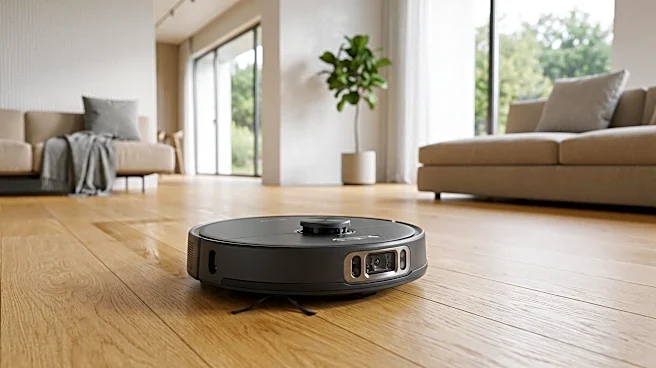
Roborock has secured the top position for the second consecutive year in PCMag's Readers' Choice survey for robot vacuum brands, and for the third time since 2022. The brand significantly outperformed iRobot, the maker of Roomba, which recently filed
for bankruptcy in late 2025. Roborock's success is attributed to its high scores in overall satisfaction, battery life (8.7), and home mapping (8.9). PCMag's reviewer, Gebhart, noted Roborock's consistent performance and innovative features, including a model with a robot arm and an upcoming bot capable of climbing stairs. In contrast, iRobot lagged behind Roborock in overall satisfaction and other key subcategories such as noise level, cleaning speed, and battery life. The smart home market, as a whole, is experiencing growth, with 57% of Americans projected to own some form of smart home technology by the end of the year, up from 48.5% in 2024.
Why It's Important?
Roborock's continued dominance in reader trust signifies a shift in the robot vacuum market, where innovation and consistent performance are key drivers of consumer loyalty. The bankruptcy of iRobot, once a pioneer in the sector, underscores the intense competition and the necessity for continuous technological advancement to remain relevant. Roborock's focus on features like robot arms and stair-climbing capabilities indicates a move towards more sophisticated and versatile home cleaning solutions, pushing the boundaries of what robot vacuums can achieve. This trend suggests that consumers are increasingly looking for devices that offer more than basic cleaning, demanding advanced navigation, longer battery life, and innovative functionalities. The overall growth in smart home adoption also highlights a broader societal embrace of automated technologies for convenience and efficiency.
What's Next?
Roborock is likely to continue its trajectory of innovation, potentially introducing more advanced features that further differentiate its products from competitors. The company's strong reader trust could translate into sustained market leadership. For the smart home industry, iRobot's bankruptcy may lead to consolidation or new entrants seeking to fill the void, potentially fostering new competition and innovation. Other manufacturers will likely observe Roborock's success and strive to match or exceed its performance in areas like battery life, home mapping, and novel features. The increasing adoption of smart home technology, driven by standards like Matter, suggests a future where interconnected devices become even more commonplace, making reliable and innovative products like Roborock's crucial for market success.
Beyond the Headlines
The contrasting fortunes of Roborock and iRobot illustrate the dynamic nature of the technology market, where even established players can falter if they don't keep pace with innovation and consumer expectations. Roborock's success is not just about cleaning power but also about addressing evolving user needs through advanced features that simplify daily life. The concept of a robot arm or a stair-climbing bot moves beyond mere automation to a more integrated and intelligent form of assistance, blurring the lines between simple appliances and true robotic companions. This evolution raises questions about the future role of AI and robotics in the home, and how these technologies will continue to reshape our living environments and daily routines, emphasizing convenience and advanced problem-solving capabilities.