




What's Happening?
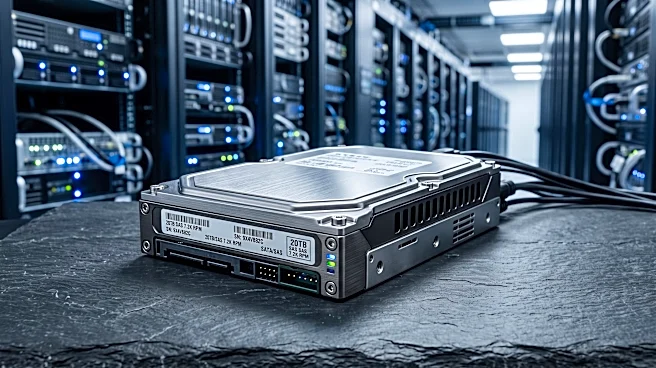
Seagate Technology Holdings is intensifying its focus on Heat Assisted Magnetic Recording (HAMR) technology, aiming for HAMR-based nearline storage to constitute approximately 50% of its shipments by the end of 2026. This strategic move is intended to reinforce
Seagate's position in the high-capacity AI data center infrastructure market. The company's management believes that HAMR execution will enhance areal density gains, which are crucial for its margin story, rather than relying solely on long-term pricing commitments. This development comes as the stock has experienced volatility, with a significant pullback over the past month despite a strong performance over the last twelve months. UBS has noted that faster hard drive supply growth, partly due to Western Digital's own HAMR program, could increase market competition and potentially pressure valuations.
Why It's Important?
The successful adoption of HAMR technology by Seagate is critical for its competitive standing in the rapidly expanding AI and cloud infrastructure sectors. As data centers continue to grow, the demand for high-capacity, cost-effective storage solutions is paramount. Seagate's ability to scale HAMR-based drives without significant qualification or reliability issues will directly impact its market share and profitability. Increased competition from rivals like Western Digital, which is also advancing its HAMR program, could lead to an oversupply of hard drives, potentially easing market tightness and compressing Seagate's operating momentum. For investors, the key concern is whether Seagate can meet its HAMR adoption targets on schedule, especially as competitive pressures intensify, influencing the company's valuation and future earnings potential.
What's Next?
The immediate focus for Seagate Technology Holdings will be on the timely and successful implementation of its HAMR technology to achieve the target of 50% nearline storage shipments by the end of 2026. The market will closely monitor HAMR penetration milestones and any potential hiccups in qualification or reliability. The ramp-up of Western Digital's HAMR program will also be a significant factor, as it could accelerate supply growth and impact market pricing. Analysts and investors will be watching for shifts in both bullish and bearish narratives as new information emerges regarding HAMR adoption rates and competitive dynamics. The company's ability to maintain its margin story through areal density gains, rather than just pricing, will be a key indicator of its future performance.
Beyond the Headlines
The push for HAMR technology by Seagate and its competitors signifies a broader industry trend towards innovative storage solutions to meet the escalating demands of AI and cloud computing. This technological race highlights the continuous need for higher data density and efficiency in data centers, which are becoming the backbone of the digital economy. The success or failure of HAMR adoption could set new standards for data storage, influencing future research and development in the sector. Furthermore, the competitive landscape underscores the importance of intellectual property and technological leadership in maintaining market dominance. The long-term implications extend to the overall cost of data storage, which could impact the accessibility and scalability of AI and cloud services for businesses and consumers alike.