





What's Happening?
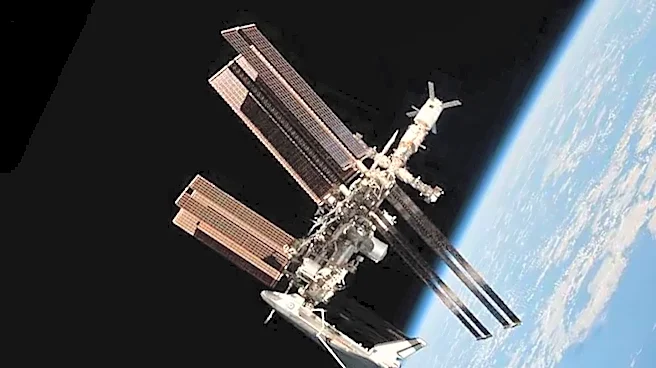
Icarus Robotics, a New York-based startup, has selected KULR Technology Group to supply batteries for its free-flying platform, Joy, which is set to be deployed on the International Space Station. The announcement was made on July 15, 2026. The KULR One
Space (K1S) battery systems will power Joy during its operations on the Joyride-1 mission, scheduled for early 2027. These batteries are designed to meet NASA's stringent safety requirements for crewed vehicles and have previously been used in NASA's Artemis 2 lunar mission. The collaboration highlights the growing need for advanced electromechanical systems in space infrastructure, which require different power solutions compared to traditional satellites. Icarus Robotics aims to enhance the capabilities of space missions through robotic labor and on-orbit computing, addressing the increasing demand for autonomous systems in space.
Why It's Important?
The partnership between Icarus Robotics and KULR Technology Group is significant as it addresses the evolving needs of space infrastructure, particularly in terms of power requirements for autonomous systems. As space missions become more complex, the demand for reliable and safe power solutions becomes critical. This collaboration not only supports the operational efficiency of space missions but also ensures the safety of astronauts by providing advanced battery technology. The development of such technologies is crucial for the expansion of space exploration, including missions to the Moon and Mars. By enhancing the capabilities of robotic systems, this partnership could lead to more efficient space operations, potentially reducing costs and increasing the feasibility of long-term space missions.
What's Next?
The next steps involve the customization of KULR's battery technology to fit the specific performance profile, size, and shape required for the Joy platform. As the Joyride-1 mission approaches, further testing and integration of these systems will be essential to ensure their readiness for deployment. The success of this mission could pave the way for more collaborations between technology providers and space exploration companies, fostering innovation in the field. Additionally, the outcomes of this mission may influence future space infrastructure projects, encouraging the development of more advanced robotic systems and power solutions.