







What's Happening?
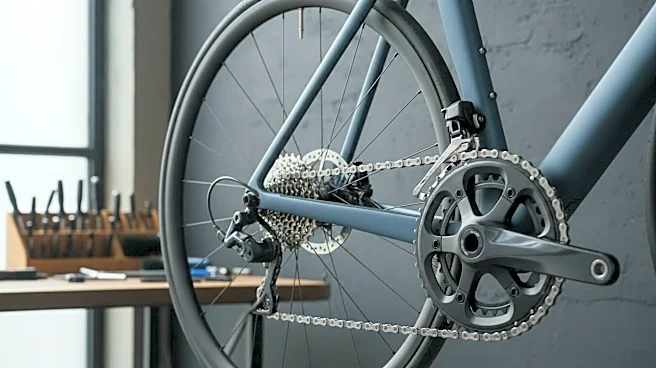
A test editor and long-time cyclist, Dan Chabanov, has switched from using Shimano-equipped road bikes to SRAM after 15 years, citing issues with Shimano's Dura-Ace R9200 brakes and power meters. Chabanov experienced two failures with R9200 brake calipers,
which appeared to be leaks at the pistons, leading to mineral-oil contamination. While Shimano offered replacements and requested the faulty units for inspection, Chabanov noted that his experience was not isolated, with a local bike shop reporting similar issues. Additionally, Chabanov expressed distrust in Shimano's FC-R8100-P and FC-R9200-P power meters, echoing concerns from experts like DC Rainmaker and GPLama regarding their inaccuracy and inconsistency, even after a 2023 firmware update. In contrast, SRAM's RED E1 groupset, launched in 2024, offered significant improvements in lever ergonomics, braking performance, and front derailleur reliability, making it a more appealing option for Chabanov.
Why It's Important?
This shift by a seasoned cyclist and test editor highlights potential reliability and performance issues within Shimano's high-end road cycling components, specifically the Dura-Ace R9200 brakes and power meters. For the U.S. cycling industry, this could influence consumer purchasing decisions and market share between major component manufacturers like Shimano and SRAM. Cyclists, particularly those investing in premium equipment, rely on consistent performance and accuracy, especially from power meters which are critical for training. The reported brake failures raise safety concerns and could lead to increased warranty claims or a reevaluation of component design by Shimano. SRAM, on the other hand, stands to gain from improved perceptions of its RED E1 groupset, particularly its advancements in braking and ergonomics, which are now seen as surpassing Shimano's offerings by some users. This competitive dynamic could drive further innovation in the cycling component market.
What's Next?
Shimano is expected to address the reported issues with its Dura-Ace R9200 components, particularly the brake reliability and power meter accuracy, as these concerns could impact its reputation and market position. The company has already launched new WH-R9370 wheels with wider rims, carbon spokes, and reduced weight, which may signal a broader update to its groupsets. Future iterations of Shimano's Dura-Ace are anticipated to incorporate improvements that could entice cyclists like Chabanov back to the brand. Meanwhile, SRAM is likely to continue capitalizing on the positive reception of its RED E1 groupset, potentially expanding its market presence. Consumers will be closely watching for new product releases and performance reviews from both manufacturers, influencing their investment in high-end cycling components. The competitive landscape will likely push both companies to innovate further in areas like reliability, ergonomics, and data accuracy.
Beyond the Headlines
The detailed comparison between Shimano and SRAM components by an experienced user like Dan Chabanov reveals a deeper trend in the cycling industry: the increasing demand for integrated, reliable, and user-friendly electronic shifting systems. The preference for fully wireless systems, as highlighted by Chabanov, points to a desire for simpler maintenance and travel convenience, which could become a standard expectation for high-end groupsets. The emphasis on accurate power meters also underscores the growing role of data-driven training in cycling, where precision and consistency are paramount. This competitive pressure could lead to a more rapid evolution of electronic shifting technology, with manufacturers focusing on not just performance but also long-term reliability, ease of use, and comprehensive data integration. The ethical implications of product reliability, especially for safety-critical components like brakes, will also remain a key consideration for manufacturers and consumers alike.