








What's Happening?
Gold prices have decreased as a result of recent military strikes between the U.S. and Iran in the Gulf region, which have also led to an increase in oil prices. The anticipation of interest rate hikes by the U.S. Federal Reserve is further impacting
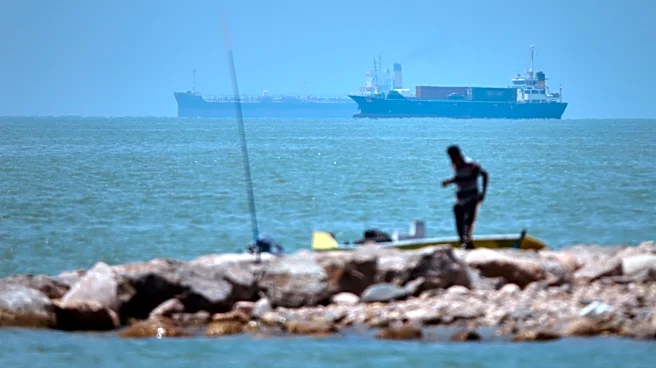
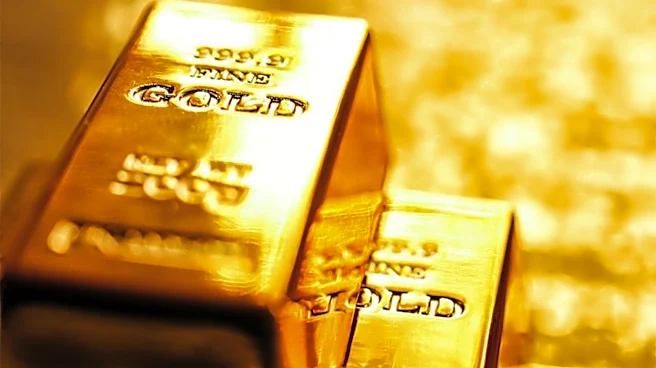
the value of gold, a non-yielding asset. Spot gold fell by 0.7% to $4,061.35 per ounce, while U.S. gold futures for August delivery dropped by 0.5% to $4,076.40. This marks the fourth consecutive monthly loss for gold, totaling a 10.4% decline. The military actions included Iran launching missiles and drones at U.S. military sites in Kuwait and Bahrain, following threats from President Trump. Despite the tensions, both nations have agreed to pause hostilities and resume talks over the Strait of Hormuz.
Why It's Important?
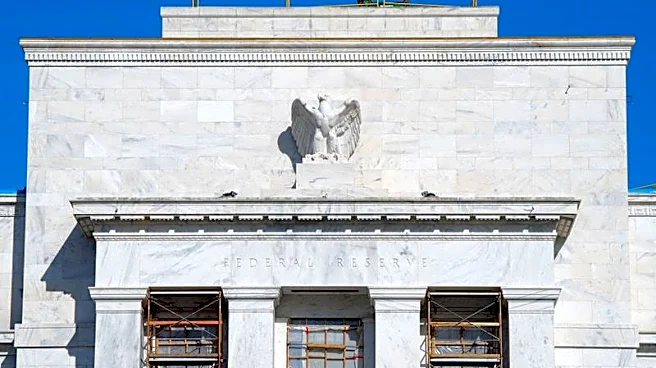
The recent developments in the Gulf have significant implications for global markets, particularly in terms of oil and gold prices. Elevated oil prices can lead to increased inflation, prompting the Federal Reserve to consider raising interest rates. While gold is traditionally viewed as a hedge against inflation, its attractiveness diminishes in a high interest-rate environment. The market is currently anticipating three rate hikes by the Fed this year, with an 80% probability of a December increase. These economic conditions could affect investors' strategies and the broader financial landscape, influencing decisions in commodities and currency markets.
What's Next?
Investors are closely monitoring upcoming economic data, including June's ADP employment figures and the U.S. nonfarm payrolls data, to better understand the Federal Reserve's future monetary policy. The outcome of these reports could further influence market expectations regarding interest rate adjustments. Additionally, the ongoing negotiations between the U.S. and Iran over the Strait of Hormuz will be pivotal in determining future oil price stability and geopolitical tensions in the region.