





What's Happening?
The journey of Black American actors in Hollywood, from early limitations to their current prominence, is being recognized, with a specific focus on the significant contributions of figures like Eddie Murphy. The 1980s and 1990s marked a period of increased
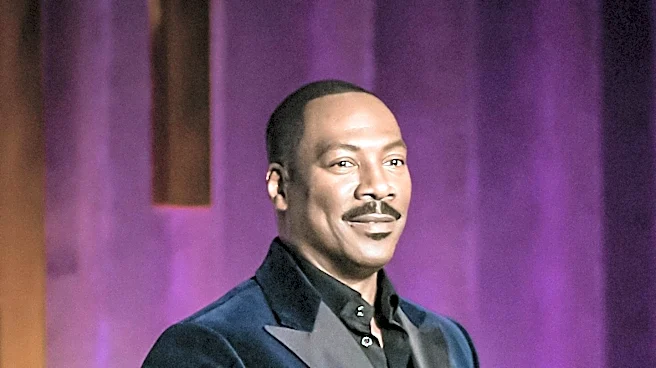
diversification in roles and the rise of new stars. Eddie Murphy is credited with bringing explosive comedic talent to mainstream blockbusters during this era. His success, alongside the groundbreaking collaborations of Spike Lee and Denzel Washington, helped to bring nuanced Black narratives to the forefront of cinema. This period built upon the foundation laid by earlier pioneers like Paul Robeson and Lena Horne, who used their artistry to resist demeaning caricatures and advocate for dignity in representation. Sidney Poitier's Oscar win in 1963 for 'Lilies of the Field' is also cited as a watershed moment that expanded the scope of leading roles for Black actors.
Why It's Important?
The recognition of Eddie Murphy's role in diversifying Hollywood underscores a broader shift in the entertainment industry. His ability to command mainstream blockbusters demonstrated the commercial viability and widespread appeal of Black talent, challenging long-standing biases within the industry. This paved the way for a new generation of actors and filmmakers to tell more authentic and complex Black stories, moving beyond stereotypical portrayals. The success of these actors has not only enriched cinematic narratives but also had a profound cultural impact, influencing fashion, language, and social discourse. Economically, the profitability of films centered on Black experiences has forced the industry to confront its own systemic barriers and invest in more inclusive content, proving that diversity is not just artistically valuable but also financially beneficial.
What's Next?
The ongoing conversation in Hollywood is shifting towards ensuring the sustainability and legacy of the progress made by Black American actors. This involves continued commitment to authentic storytelling, implementing diverse hiring practices behind the camera, and championing projects that push creative boundaries. Veteran actors are increasingly mentoring new talent, while a new wave of stars is bringing fresh perspectives and global viewpoints to the industry. The emergence of streaming platforms is expected to continue providing new avenues for diverse stories that might have been overlooked by traditional studios, further expanding opportunities for Black actors and filmmakers. The challenge remains to ensure that this progress becomes a permanent fixture of the industry's DNA, fostering a truly inclusive and equitable environment.
Beyond the Headlines
The ascent of Black American actors, exemplified by figures like Eddie Murphy, represents more than just career successes; it signifies a profound cultural and societal transformation. Their journey reflects a powerful narrative of resilience and redefinition, turning exclusion into eminence. This movement has inspired countless young people to pursue careers in the arts, creating a more inclusive pipeline for future talent. The impact extends to challenging and reshaping societal perceptions, fostering greater understanding and appreciation of diverse experiences. The ongoing efforts to achieve creative control and expand Black storytelling, as seen with figures like Jordan Peele transitioning into influential filmmakers, highlight a deeper push for self-determination and authentic representation that goes beyond mere visibility to true empowerment within the industry.