




What's Happening?
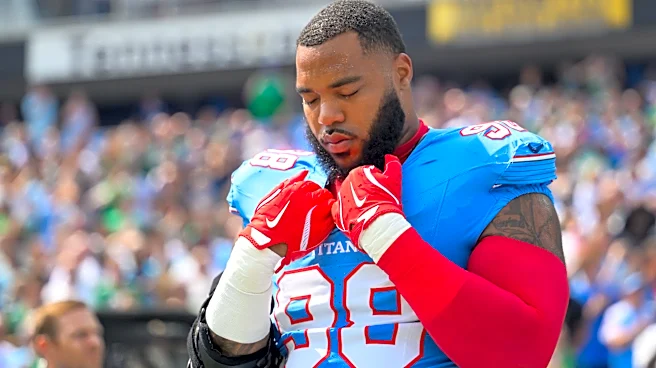
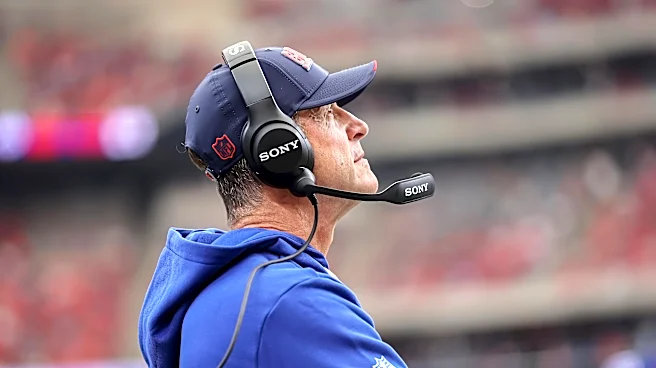
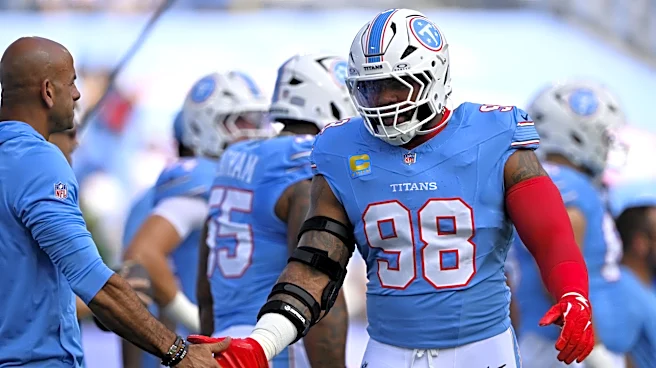
New York Giants head coach John Harbaugh reportedly bypassed General Manager Joe Schoen and directly contacted Tennessee Titans owner Amy Adams Strunk to inquire about a trade for defensive tackle Jeffery Simmons. This move occurred after Schoen had already
been informed by Titans GM Mike Borgonzi that Simmons was not available. Harbaugh's direct approach to the owner, despite Borgonzi's prior refusal to Schoen, is seen as a breach of an unwritten NFL code among primary football decision-makers, who typically only deal with each other. The attempt was ultimately unsuccessful, as Simmons was later traded to the Chicago Bears for two first-round picks and a fourth-round pick. The Giants, currently leading the NFC East with a 4-2-1 record, are actively seeking to improve their roster before the November 10 trade deadline.
Why It's Important?
This incident highlights a significant deviation from established NFL executive etiquette and could have lasting implications for the Giants' future trade negotiations. By circumventing his own general manager and directly approaching another team's owner, Harbaugh risks alienating other GMs, potentially making it more difficult for the Giants to execute trades in the future. The unwritten rule of GMs dealing with GMs is crucial for maintaining trust and smooth operations within the league's front offices. While Harbaugh's intention may have been to aggressively pursue talent for a playoff-contending team, the method employed could damage the Giants' reputation and complicate their ability to acquire players through trades, impacting their long-term roster building strategy. The situation also underscores the unique organizational structure within the Giants, where Harbaugh reportedly reports directly to ownership rather than the general manager.
What's Next?
The Giants are expected to remain active in the trade market as the November 10 deadline approaches, with General Manager Joe Schoen tasked with canvassing the league for potential upgrades, particularly on the defensive line and at running back. However, the fallout from Harbaugh's controversial call could make future negotiations more challenging. Other NFL general managers might be less inclined to engage in trade talks with the Giants if they perceive a risk of their authority being undermined. The team will enter a bye week before facing the Philadelphia Eagles on November 8, providing an opportunity for internal discussions regarding executive protocols and external perceptions. The long-term impact on Harbaugh's relationship with other league executives and the Giants' standing in the trade market will be closely watched.
Beyond the Headlines
Harbaugh's action raises questions about the evolving dynamics of power and communication within NFL organizations, especially when a head coach has a direct reporting line to ownership, bypassing the general manager. This structure, while not entirely unique, challenges the traditional hierarchy and can lead to friction and perceived breaches of protocol. The incident also reflects the intense pressure on NFL teams to win, sometimes leading to unconventional or aggressive tactics in player acquisition. The unwritten rules of the league, often based on mutual respect and established channels, are critical for its smooth functioning. When these are broken, it can lead to a breakdown of trust and create a more adversarial environment, potentially impacting not just the Giants but also setting a precedent for how other teams might operate in the future.