





What's Happening?
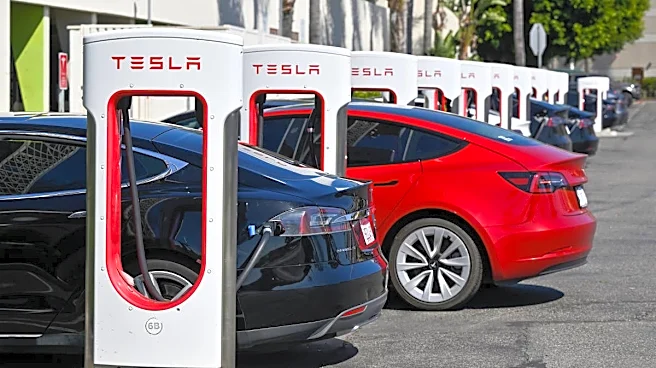
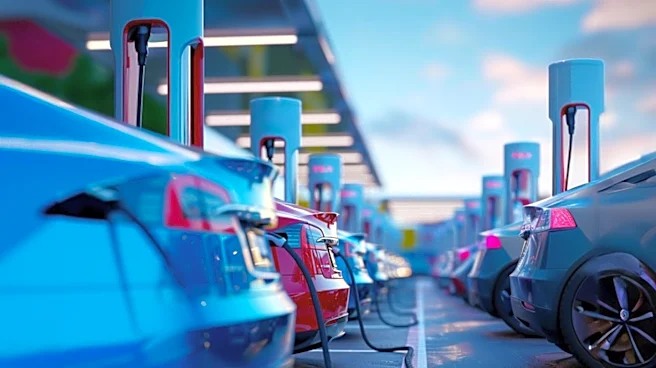
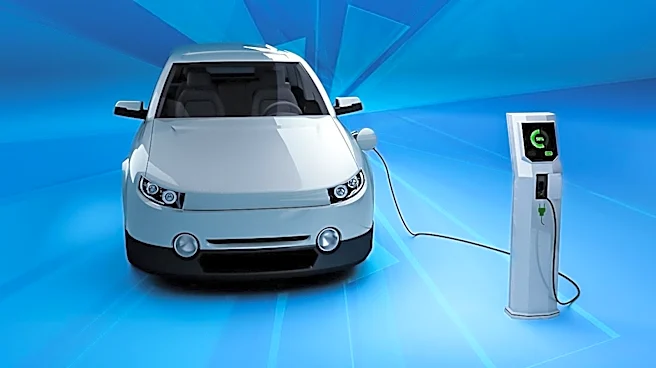
The electric vehicle (EV) charging infrastructure in the United States has seen substantial improvements over the past few years. According to recent data, the number of DC fast chargers has more than doubled since 2023, with Tesla's network now widely
accessible to non-Tesla EV drivers. This expansion has been accompanied by a notable increase in reliability, with the Paren reliability index showing a rise from 85 to the mid-90s. The improvements are attributed to increased competition among charging networks, leading to better service and faster repairs of broken chargers. These developments have made long-distance EV travel more feasible and convenient, as evidenced by recent road trip experiences that reported nearly flawless charging sessions.
Why It's Important?
The advancements in EV charging infrastructure are crucial for the broader adoption of electric vehicles in the U.S. As public charging becomes more reliable and accessible, consumer concerns about range anxiety and charging availability are alleviated. This progress supports the transition to cleaner transportation, reducing reliance on fossil fuels and contributing to environmental sustainability. The expansion of charging networks also stimulates economic growth by creating jobs in the construction and maintenance of charging stations. Furthermore, the increased competition among charging providers is likely to drive further innovations and improvements in service quality, benefiting consumers and the environment alike.
What's Next?
Continued expansion and enhancement of the EV charging network are expected, with more chargers being added monthly and existing ones being repaired more swiftly. As the infrastructure grows, it is anticipated that more consumers will consider switching to electric vehicles, further accelerating the shift towards sustainable transportation. Policymakers and industry stakeholders may focus on addressing remaining gaps in the network and ensuring equitable access to charging facilities across different regions. Additionally, advancements in charging technology and infrastructure are likely to continue, potentially leading to even faster and more efficient charging solutions in the future.