






What's Happening?
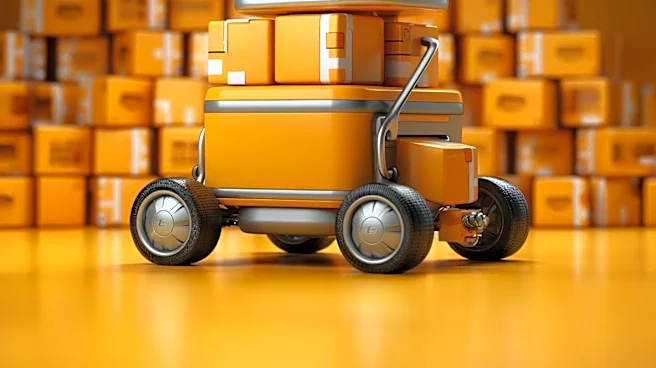
DoorDash is encountering significant challenges in scaling its Dot delivery robot, as highlighted by CEO Tony Xu during a recent earnings call. The company has been testing the Dot robot in Phoenix, Arizona, and is working on obtaining permits to expand
its use to other cities. However, several issues need resolution before a broader rollout can occur. These include accurately estimating restaurant order preparation times and ensuring the robot can navigate complex delivery scenarios, such as gated communities and interactions with doormen. Additionally, DoorDash is currently paying workers to manually load orders into the robots, which Xu acknowledges as a minor fraction of the challenges that need addressing. The company is also preparing to tackle similar issues for its upcoming DoorDash Air drone delivery service, expected to launch later this year.
Why It's Important?
The development of autonomous delivery systems like DoorDash's Dot robot represents a significant shift in the logistics and delivery industry. Successfully implementing such technology could reduce labor costs and increase efficiency, potentially transforming the delivery landscape. However, the challenges faced by DoorDash highlight the complexities involved in automating delivery processes, particularly in urban environments with diverse logistical hurdles. The outcome of DoorDash's efforts could influence other companies in the sector, as they also explore autonomous solutions. Moreover, the success or failure of these initiatives could impact DoorDash's competitive position in the market, affecting its financial performance and strategic direction.
What's Next?
DoorDash plans to continue refining its Dot delivery robot and address the identified challenges before expanding its use. The company is also focusing on its DoorDash Air drone delivery service, which is set to begin operations later this year. As these technologies develop, DoorDash will likely seek to secure additional permits and partnerships to facilitate broader deployment. The company's progress in overcoming these challenges will be closely watched by industry stakeholders, as it could set a precedent for the future of autonomous delivery systems.