






What's Happening?
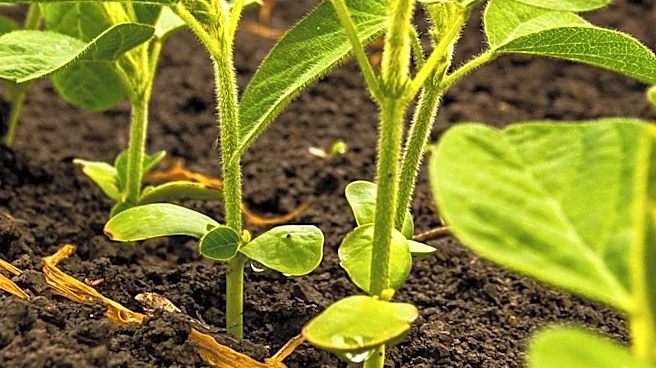
A comparison of typical soybean farms in the U.S. and Brazil from 2020 to 2024 reveals distinct differences in input costs. U.S. farms consistently spent more on seed, averaging $66 per acre compared to Brazil's $43. This is attributed to U.S. seeds carrying
more stacked traits and Brazil producing its own seed, reducing import exposure. Conversely, Brazilian farms incurred higher costs for fertilizer and pesticides. Brazilian farms spent an average of $85 per acre on fertilizer versus $57 for U.S. farms, largely due to the acidic, nutrient-poor soils in Brazil's Cerrado region requiring more application and Brazil's high dependence on imported fertilizers. Pesticide costs were also higher in Brazil, averaging $81 per acre compared to $56 in the U.S., driven by greater insect and disease pressure in its tropical climate. Overall, U.S. farms had higher total production costs, primarily due to significantly higher overhead costs, mainly land, which accounted for about 40% of U.S. costs but 19% to 30% of Brazilian costs.
Why It's Important?
This cost disparity significantly impacts the competitiveness of U.S. soybean producers in the global market. With Brazil and the U.S. accounting for nearly 70% of global soybean production, understanding these cost structures is crucial. The higher land costs in the U.S. represent a structural disadvantage that cannot be easily offset by lower direct input spending. The reliance of Brazilian farmers on imported fertilizers and pesticides makes their cost advantage vulnerable to global price fluctuations and currency exchange rates, as seen with the surge in fertilizer prices after Russia's invasion of Ukraine. For U.S. farmers, while seed costs are higher, their relative independence from imported fertilizers and pesticides offers some stability. The findings highlight that simply cutting input spending in the U.S. may not be enough to close the cost gap with Brazil, emphasizing the need for broader strategies to enhance competitiveness, potentially through technological advancements or policy support addressing land costs.
What's Next?
The ongoing cost differences between U.S. and Brazilian soybean production will likely continue to influence global trade dynamics. U.S. soybean producers will need to focus on optimizing efficiency in areas where they have control, such as precision agriculture to reduce fertilizer and pesticide use, and exploring seed varieties that offer high yields without disproportionately increasing costs. For Brazil, efforts to reduce reliance on imported inputs, potentially through domestic production or diversification of sourcing, could stabilize their production costs. Both countries will continue to be affected by global commodity prices and geopolitical events that impact input costs. The Purdue University–CME Group Ag Economy Barometer indicates that U.S. producers are concerned about their competitiveness, suggesting that policymakers and agricultural organizations may need to explore strategies to support U.S. farmers in navigating these cost challenges and maintaining their market share.
Beyond the Headlines
The comparison of soybean production costs between the U.S. and Brazil reveals deeper economic and environmental implications. Brazil's need for extensive fertilizer application due to soil conditions highlights the environmental challenges of expanding agriculture into new regions, often requiring significant chemical inputs to maintain productivity. The differing regulations on saving genetically engineered seeds also point to varying intellectual property rights frameworks and their impact on farmer autonomy and seed market dynamics. The structural advantage of lower land costs in Brazil, contrasted with the U.S., reflects historical land use patterns, population density, and agricultural policies. This study underscores that agricultural competitiveness is not solely about direct input costs but also encompasses broader economic factors, environmental conditions, and regulatory environments. The long-term sustainability of soybean production in both nations will depend on how these complex factors are managed, balancing economic viability with ecological stewardship.