




What's Happening?
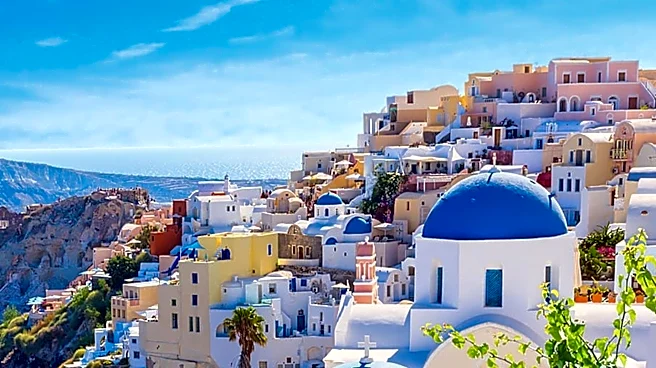
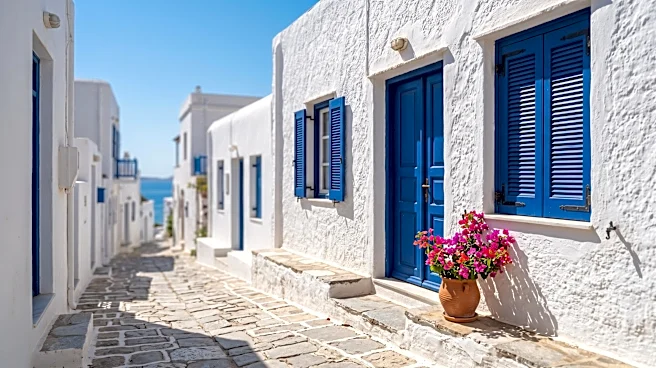
Santorini, Greece, is renowned for its unique blend of natural beauty and cultural attractions, drawing visitors with its dramatic volcanic caldera, picturesque villages like Oia, and distinctive Cycladic architecture. The island offers a variety of experiences,
from exploring its volcanic origins and unique black sand beaches to indulging in local cuisine and wines. Travelers can choose from activities such as cable car rides, donkey treks, or private guided tours to navigate the island's steep terrain and discover hidden gems. The island's agricultural practices are also notable, particularly the Assyrtiko grapevines that thrive on morning dew due to the lack of natural potable water sources. Dining experiences often feature local specialties like Domatokeftedes (tomato fritters), Santorinian fava, and fresh seafood, often paired with local Assyrtiko wine, as highlighted by a recent travel account.
Why It's Important?
Santorini's appeal as a premier tourist destination significantly contributes to the Greek economy, particularly in the hospitality and tourism sectors. Its unique geological features, such as the caldera and volcanic beaches, attract a global audience, fostering a demand for specialized tours and accommodations. The island's distinct agricultural methods, like the cultivation of Assyrtiko grapes without irrigation, showcase sustainable practices in challenging environments, offering insights into resilient farming. The emphasis on local cuisine and wine not only preserves cultural heritage but also supports local producers and culinary traditions. The diverse range of activities, from luxury experiences to exploring traditional villages, caters to a broad spectrum of travelers, reinforcing Santorini's status as a versatile and economically vital destination within the Mediterranean tourism market.
What's Next?
Santorini is expected to continue attracting a high volume of tourists, with travel seasons extending from December to April for sunny conditions and May to August for warm ocean temperatures, ideal for water activities. Tour operators will likely continue to offer a range of excursions, including Caldera Sunset Cruises and volcanic wine tours, to cater to diverse visitor interests. The island's infrastructure will need to adapt to manage the influx of tourists, potentially leading to further development in transportation and accommodation options. Efforts to preserve the island's unique environment and cultural heritage, such as traditional Cycladic architecture and sustainable agricultural practices, will remain crucial to maintaining its long-term appeal. The focus on unique local experiences, like dining at sea-view restaurants and exploring less crowded villages, will likely grow as travelers seek more authentic encounters.
Beyond the Headlines
Beyond its surface-level beauty, Santorini embodies a fascinating interplay between human resilience and natural forces. The island's dramatic landscape is a constant reminder of its volcanic past, influencing everything from its architecture to its agriculture. The unique cultivation of Assyrtiko grapes, relying solely on atmospheric moisture, highlights an ingenious adaptation to environmental constraints, offering lessons in sustainable living. The contrast between bustling tourist hubs like Fira and the tranquil charm of villages like Megalochori reveals the complexities of tourism development and its impact on local communities. The preservation of traditional practices and the emphasis on local products, such as the distinct Greek cuisine, underscore the importance of cultural identity in the face of globalization. Santorini serves as a microcosm for understanding how communities adapt to and thrive within unique ecological and economic pressures.