




What's Happening?
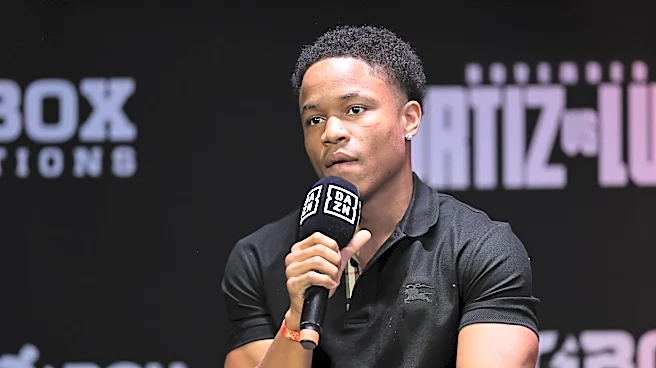
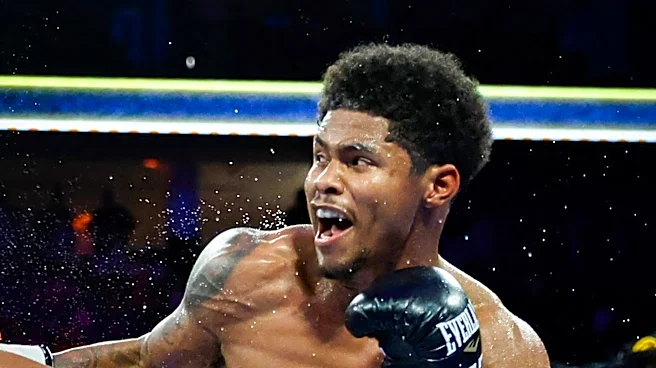
British boxer Jack Catterall has publicly stated his belief that Devin Haney would defeat Shakur Stevenson in a potential boxing match, primarily citing Haney's significant size and reach advantage. Catterall, who has observed both fighters in person,
noted that Haney appears considerably larger than Stevenson. He suggests that Haney's superior jab and ability to fight comfortably at welterweight would force Stevenson to initiate exchanges more frequently and work harder to control the fight from a distance. This assessment also sheds light on the proposed 144-pound catchweight, which Catterall believes would benefit Stevenson by potentially making Haney's weight cut more demanding and impacting his energy or endurance. Haney had previously accepted the 144-pound catchweight in June, but a deal was not finalized, and his camp is reportedly no longer willing to accommodate Stevenson's weight demands.
Why It's Important?
This prediction from a respected boxer like Jack Catterall highlights a critical aspect of modern boxing: the strategic importance of size and weight in high-stakes matchups. The discussion around a potential Haney-Stevenson fight, and specifically the proposed catchweight, underscores the intricate negotiations and tactical considerations that often precede major bouts. For fans, it emphasizes the potential for a compelling clash of styles, where Haney's reach and jab could counter Stevenson's defensive prowess. For the boxers themselves, it illustrates the delicate balance between securing a favorable weight and ensuring optimal performance. The inability to finalize a deal at the proposed catchweight also reflects the power dynamics in boxing, where each fighter's camp aims to maximize their advantage, potentially leading to delays or the collapse of highly anticipated fights.
What's Next?
The immediate next steps for a potential fight between Devin Haney and Shakur Stevenson remain uncertain, given the previous failure to finalize a deal at the 144-pound catchweight. Catterall's comments suggest that if the fight were to happen at the full welterweight limit, Haney would have a substantial advantage, potentially making Stevenson come forward more than he prefers. For Stevenson, the challenge would be to overcome Haney's jab and reach, either by consistently countering or increasing his offensive output. Haney, in turn, would need to diversify his attack to prevent Stevenson from anticipating and countering his jab. The ongoing discussions and public statements from various boxing figures will likely continue to shape the narrative around this highly anticipated potential matchup, influencing future negotiations and fan expectations.
Beyond the Headlines
The debate surrounding a potential Devin Haney vs. Shakur Stevenson fight, particularly the emphasis on size and weight, reflects a broader trend in boxing where physical attributes are increasingly scrutinized as strategic advantages. This goes beyond mere weight classes, delving into how a fighter's natural build and reach can dictate the flow of a match. The reluctance of camps to concede on weight demands, as seen with Haney's team, highlights the commercial and competitive pressures in the sport. Fighters and their teams are not just strategizing for the ring but also for the negotiation table, where every pound and inch can translate into a perceived edge or disadvantage. This dynamic can sometimes lead to a stalemate, preventing highly anticipated matchups from materializing, much to the frustration of fans who desire to see the best fight the best without such external complications.