




What's Happening?
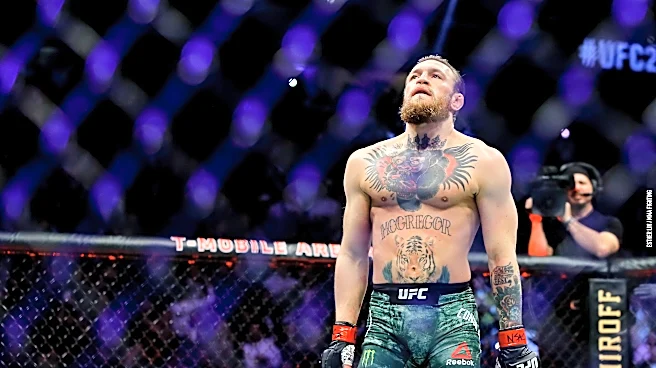
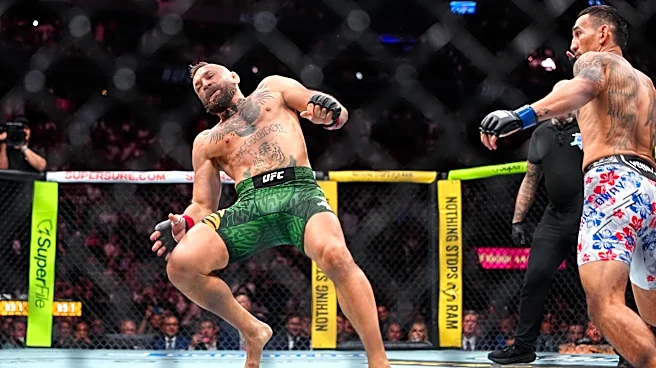
Conor McGregor's highly anticipated return to the UFC octagon ended abruptly due to an injury sustained during his fight against Max Holloway at UFC 329. The bout, held at T-Mobile Arena in Las Vegas, saw McGregor attempting a series of kicks in the first
round, which led to him falling and injuring his right leg. The referee, Mike Belton, stopped the fight at 1:09 of the first round after McGregor was unable to continue. This fight marked McGregor's return after nearly five years away from the sport, and it ended in disappointment as he was unable to showcase his skills against Holloway.
Why It's Important?
McGregor's return was highly anticipated by fans and the UFC community, as he remains one of the sport's most popular figures. His injury not only halted his comeback but also raised questions about his future in the sport. The fight's outcome impacts the UFC's welterweight division, as McGregor's presence often draws significant attention and revenue. Holloway's victory, albeit due to injury, could position him for future high-profile fights, potentially boosting his career. The event underscores the physical demands and risks associated with mixed martial arts, highlighting the unpredictability of the sport.
What's Next?
Following the injury, McGregor will likely undergo medical evaluation to determine the extent of his injury and the necessary recovery time. This could delay any future fights he might have planned, including potential rematches or new matchups. For Holloway, the victory could open opportunities for more significant fights, possibly against top contenders in the welterweight division. The UFC will need to assess the impact of McGregor's injury on their event scheduling and promotional strategies, as his fights typically draw large audiences.