






What's Happening?
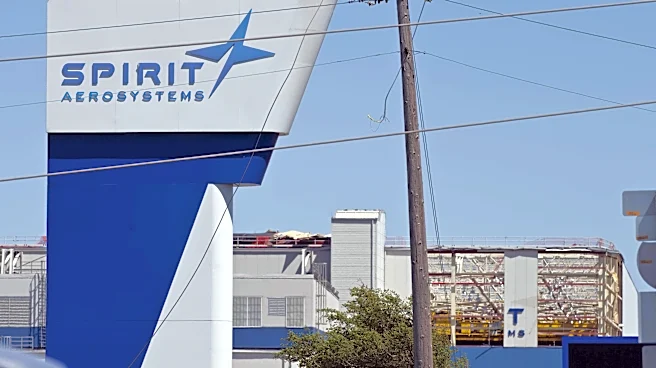
Spirit AeroSystems, a wholly owned subsidiary of The Boeing Company, is actively recruiting for Associate and Mid-Level Industrial Engineers in Wichita, Kansas. These roles are within Spirit's Commercial Business Units, which are dedicated to designing
and building commercial aerostructures for clients including Boeing Commercial Airplanes. The company's primary products encompass fuselages, pylons, nacelles, and wing components, with a focus on advanced composite and aluminum manufacturing. Industrial Engineers will be crucial in optimizing manufacturing systems by analyzing workflows, production capacity, facility layouts, and product flow. Their responsibilities include developing time standards, balancing production lines, improving efficiency, and implementing data-driven solutions to enhance safety, quality, cost, and delivery. The positions are union-represented and require a Bachelor's Degree in Engineering from an ABET-accredited program, with 2+ years of related experience for Associate level and 5+ years for Mid-Level. Salary ranges are $71,650 - $109,800 for Associate and $85,600 - $131,200 for Mid-Level, with potential eligibility for a $5,000 Kansas Aviation tax credit.
Why It's Important?
The recruitment of Industrial Engineers by Spirit AeroSystems is vital for enhancing the efficiency and productivity of U.S. aerospace manufacturing. These roles directly contribute to optimizing the production of critical aircraft components, which is essential for meeting the increasing global demand for commercial aircraft. By focusing on workflow analysis, capacity planning, and process improvement, these engineers will help reduce costs, improve quality, and accelerate delivery times for Boeing's aircraft programs. This directly impacts Boeing's competitiveness in the global market and its ability to fulfill orders. The emphasis on data-driven solutions and continuous improvement reflects the industry's commitment to operational excellence. Furthermore, the Kansas Aviation tax credit highlights state efforts to support the aerospace industry, fostering job creation and economic growth in the region.
What's Next?
Spirit AeroSystems will continue to integrate these new Industrial Engineers into its manufacturing operations, with a focus on implementing their expertise to streamline production processes. The ongoing optimization efforts are expected to lead to tangible improvements in manufacturing efficiency and product quality for commercial aerostructures. As the commercial aircraft manufacturing market is projected to grow significantly, driven by demand for fuel-efficient aircraft and fleet modernization, the need for such specialized engineering roles will remain high. The success of these optimization initiatives will directly influence Spirit AeroSystems' ability to support Boeing's production targets and maintain its position as a leading aerostructures supplier. The Kansas tax credit will likely continue to be a draw for engineering talent to the region.
Beyond the Headlines
The strategic importance of industrial engineering in aerospace manufacturing extends to broader implications for supply chain resilience and technological advancement. In an industry where precision and efficiency are paramount, the role of industrial engineers in identifying bottlenecks and implementing lean manufacturing principles is critical. This focus on operational excellence is particularly relevant given recent supply chain disruptions and the increasing complexity of modern aircraft. By optimizing production, Spirit AeroSystems not only enhances its own capabilities but also contributes to the overall stability and predictability of the aerospace supply chain, benefiting Boeing and ultimately the airlines. The continuous improvement driven by these engineers can also foster an environment for adopting new manufacturing technologies and materials, pushing the boundaries of what is possible in aerostructure design and production.