




What's Happening?
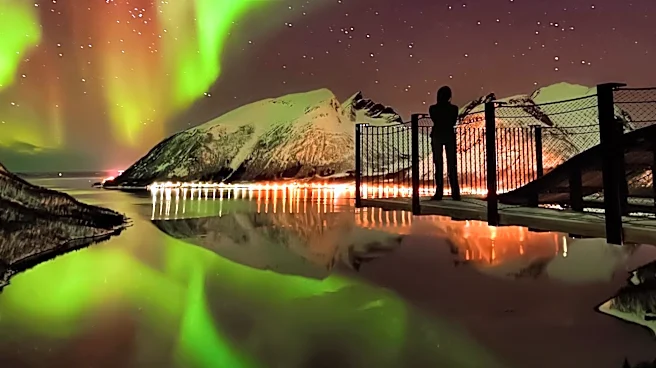
Global interest in viewing the Aurora Borealis, commonly known as the Northern Lights, has seen a significant surge, with Trip.com data indicating a 132% year-on-year increase in global searches for the phenomenon. This heightened interest is translating
into actual booking behavior, with reservations for aurora-viewing tours and packages rising by 225% year-on-year. Top destinations experiencing this booking boom include Reykjavík, Iceland; Tromsø, Norway; and Yellowknife, Canada. Notably, bookings to Rovaniemi, Finland, have increased by 72%, Kiruna, Sweden, by 56%, and Tromsø, Norway, by 48%. This travel trend is driven by reports suggesting that the 2026-2027 season is expected to be the last reliably strong aurora season before activity diminishes to a minimum around 2031. Travelers from markets such as China, the United Kingdom, Hong Kong SAR, Japan, and Singapore are key contributors to this growth.
Why It's Important?
The surge in Northern Lights tourism has significant economic implications for the travel and hospitality sectors in Nordic countries and other aurora-viewing regions. The increased demand for tours, accommodations, and related services is boosting local economies, creating jobs, and generating revenue for businesses. This trend also highlights the impact of natural phenomena on global tourism patterns, as travelers are motivated by the limited window of opportunity to witness strong aurora displays. The extended stays of international travelers, averaging eight to nine days, further amplify the economic benefits, as they engage in various winter activities beyond aurora chasing, such as whale watching, sea fishing, skiing, and sledding. This influx of tourism also puts pressure on infrastructure and local resources in these often remote locations, requiring careful management to ensure sustainable growth.
What's Next?
As the 2026-2027 season approaches, a continued increase in bookings and travel to Northern Lights destinations is anticipated, driven by the impending decline in aurora activity. Travel companies and local tourism boards are likely to further capitalize on this demand by offering more specialized packages and experiences. There may also be a focus on promoting alternative winter activities to encourage longer stays and diversify tourism offerings beyond just aurora viewing. However, the industry will need to prepare for a potential downturn in interest and bookings after 2027, as the aurora activity is projected to wane until around 2031. This could lead to a shift in marketing strategies and a greater emphasis on other attractions in these regions during the period of reduced aurora visibility.
Beyond the Headlines
The heightened interest in the Northern Lights underscores a broader trend of experiential travel, where unique and time-sensitive natural events drive significant tourism flows. This phenomenon also raises questions about the environmental impact of increased tourism in fragile Arctic and sub-Arctic regions. The influx of visitors, while economically beneficial, can lead to increased carbon emissions from travel, waste generation, and potential disturbances to local ecosystems. There's a growing need for sustainable tourism practices and responsible travel initiatives to mitigate these impacts. Furthermore, the allure of the aurora highlights the human fascination with natural wonders and the desire to connect with the natural world, even as climate change continues to alter these environments.