


What's Happening?
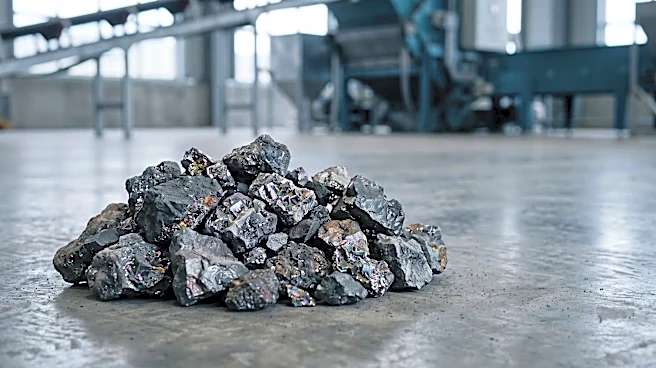
The United States Geological Survey (USGS) 2026 edition provides comprehensive data on global rare earth reserves and production. China holds the largest rare earth reserves, estimated at 44,000,000 metric tons of rare-earth oxide (REO) equivalent. Brazil
ranks second with 11,000,000 metric tons, and Australia is third with 6,300,000 metric tons. The United States possesses 1,900,000 metric tons of reserves. In terms of 2025 mine production, China was the top producer, with an estimated 270,000 metric tons REO, contributing to a world total of 390,000 metric tons. The United States was the second-largest producer, mining an estimated 51,000 metric tons, followed by Australia (29,000 metric tons) and Burma (22,000 metric tons). The report highlights that while some countries have substantial reserves, their production levels are low, indicating that economic extraction and operational facilities are not always in place.
Why It's Important?
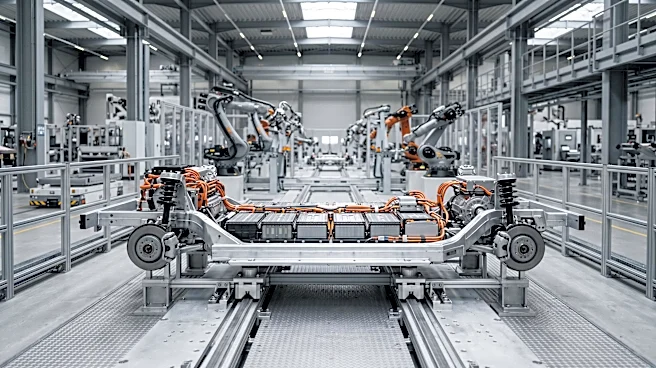
The USGS data underscores the significant global reliance on China for rare earth elements, which are critical for numerous advanced technologies, including electric vehicles, wind turbines, and defense systems. This concentration of supply creates vulnerabilities for countries like the United States, which depend on these materials for their industrial and technological sectors. The disparity between reserves and production in several countries, such as Brazil, Russia, and Vietnam, indicates untapped potential but also highlights the substantial investment and infrastructure required to bring these reserves to market. For the U.S., increasing domestic production and diversifying international supply chains are crucial to reduce dependency and enhance national security. The report also notes that the U.S. imported 71% of its rare earth compounds and metals from China between 2021 and 2024, emphasizing the current supply chain challenges.
What's Next?
The insights from the USGS report will likely fuel continued efforts by the United States and its allies to secure and diversify their rare earth supply chains. This includes investments in domestic mining and processing facilities, as well as strategic partnerships with other countries that possess significant reserves. The U.S. government's involvement in projects like the acquisition of Brazil's Serra Verde mine by USA Rare Earth demonstrates a proactive approach to securing heavy rare earth elements. Future developments will likely involve increased exploration in countries with known reserves but low production, technological advancements in extraction and processing to make more deposits economically viable, and the expansion of recycling initiatives to recover rare earths from end-of-life products. Policy decisions regarding trade and critical mineral strategies will also play a significant role in shaping the global rare earth landscape.
Beyond the Headlines
The USGS report implicitly highlights the complex interplay between geological abundance, economic viability, and geopolitical strategy in the rare earth sector. While rare earths are not inherently scarce in the Earth's crust, their concentration in economically minable deposits is rare, and their chemical similarities make separation challenging and costly. This complexity contributes to the current supply chain dynamics. The report also touches upon China's export controls, which can significantly impact global markets and accelerate efforts by other nations to develop their own capabilities. The long-term implications include a potential shift in global manufacturing and technological leadership as countries vie for control over these essential materials. Furthermore, the environmental footprint of rare earth mining and processing will remain a critical consideration, driving innovation towards more sustainable and less impactful methods as new sources are developed.