
What's Happening?
The Panama Canal Authority has announced a reduction in the number of ships permitted to transit the canal daily, a measure necessitated by severe drought conditions exacerbated by the El Niño phenomenon.
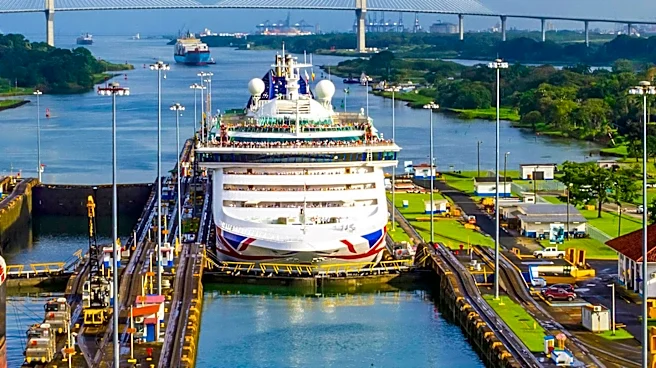
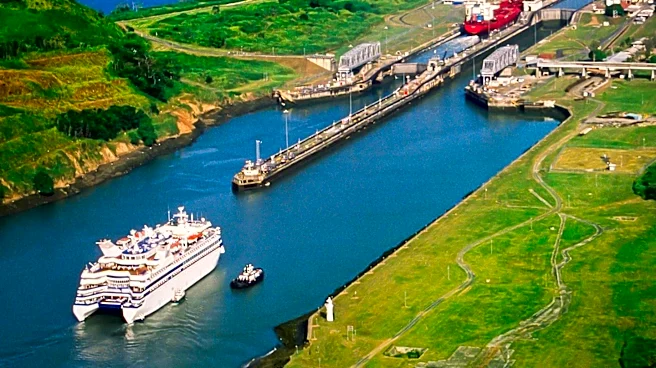
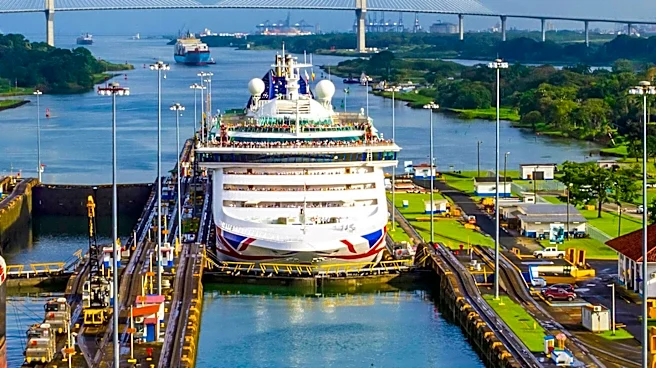
Starting September 3, the daily limit will decrease from 36 to 34 vessels, with a further reduction to 32 vessels by September 15. This decision stems from critically low water levels in the two artificial lakes that supply the canal. The region has experienced a 34% decrease in rainfall between May and August compared to historical averages, a deficit expected to worsen due to El Niño. The canal, a vital global trade artery, connects the Atlantic and Pacific oceans and is crucial for international shipping, handling 5% of global maritime trade and approximately 40% of U.S. container traffic. The reduced capacity aims to ensure the long-term sustainability of the waterway, which also supplies water to half of Panama's 4.2 million residents.
Why It's Important?
The Panama Canal's operational restrictions have significant implications for global supply chains and U.S. commerce. As approximately 40% of U.S. container traffic passes through the canal, these reductions will likely lead to increased shipping costs and extended transit times for goods destined for or originating from the United States. Major U.S. retailers and energy companies, particularly those trading with China and other parts of Asia, rely heavily on the canal for cost-effective and timely deliveries. The reduced capacity could force shippers to seek alternative, longer, and more expensive routes, such as around the Cape of Good Hope or through the Suez Canal, impacting delivery schedules and potentially contributing to inflationary pressures on consumer goods. The U.S. was a primary user of the canal, which was completed under its supervision in 1914, alongside countries like Japan, Chile, and South Korea. This situation underscores the vulnerability of critical global infrastructure to climate-related events and highlights the need for resilient supply chain strategies.
What's Next?
The Panama Canal Authority anticipates further restrictions on ship transits, depending on rainfall levels in the coming weeks. This ongoing uncertainty will likely prompt shipping companies and businesses to re-evaluate their logistics and potentially explore long-term alternative shipping routes or modes of transport. The increased waiting times for vessels without prior reservations, which currently account for about 10% of canal traffic, are expected to rise significantly. While 90% of transits are pre-booked, the remaining slots are auctioned, and the cost of these slots has already seen a dramatic increase, with one shipping company paying $4 million in April 2026, compared to an average of $135,000 before the current crisis. This trend suggests that the financial burden of canal transit will continue to escalate, impacting the profitability of businesses reliant on this route. Stakeholders will closely monitor weather patterns and the Canal Authority's announcements for any changes to the transit schedule.
Beyond the Headlines
The situation at the Panama Canal extends beyond immediate logistical challenges, revealing deeper issues related to climate change and global resource management. The El Niño phenomenon, a natural climate pattern, is intensifying, leading to more extreme weather events like the severe drought affecting Panama. This highlights the growing impact of climate variability on essential global infrastructure and economic stability. The dual role of the canal's water sources—serving both shipping operations and the local population's drinking water needs—creates a complex humanitarian and economic dilemma. The long-term sustainability of the canal, a marvel of engineering, is now directly linked to environmental factors, prompting questions about future infrastructure resilience and adaptation strategies in a changing climate. This event could accelerate investments in climate-resilient infrastructure and diversified trade routes, potentially reshaping global trade patterns and emphasizing the interconnectedness of environmental health and economic prosperity.