










What's Happening?
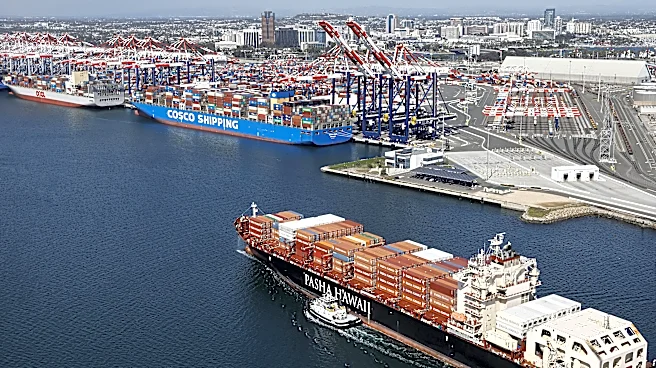
The U.S. goods trade deficit increased to a 14-month high in May, driven by a significant rise in imports. The deficit grew by 27.4% to $105.8 billion, as reported by the Commerce Department. This increase was attributed to businesses boosting imports to avoid
shortages and higher prices linked to the Middle East conflict. Imports of goods rose by $10.9 billion, or 3.6%, reaching $313.4 billion. The surge in imports was led by automotive vehicles and consumer goods. Despite high inflation, consumer spending remained strong, supported by tax refunds and a stock market rally.
Why It's Important?
The widening trade deficit poses challenges for the U.S. economy, potentially dragging down GDP growth. The reliance on imports, particularly in the context of an AI investment boom, highlights vulnerabilities in domestic manufacturing and supply chains. The trade deficit's impact on national income growth and economic stability is a concern for policymakers. Additionally, the situation underscores the complexities of global trade dynamics, especially in light of geopolitical tensions and economic policies.
What's Next?
Economists have adjusted their growth estimates for the second quarter, anticipating a potential drag on GDP due to the trade deficit. The U.S. may need to address underlying issues in manufacturing and supply chains to reduce dependency on imports. Future economic policies could focus on enhancing domestic production capabilities and addressing trade imbalances. The ongoing AI investment boom may require a corresponding increase in services exports to offset the influx of imported equipment.