




What's Happening?
Chinese President Xi Jinping has announced China's support for establishing a world association for bay areas economic cooperation. This initiative aims to deepen exchanges and interactions among bay areas globally and explore new avenues for stronger
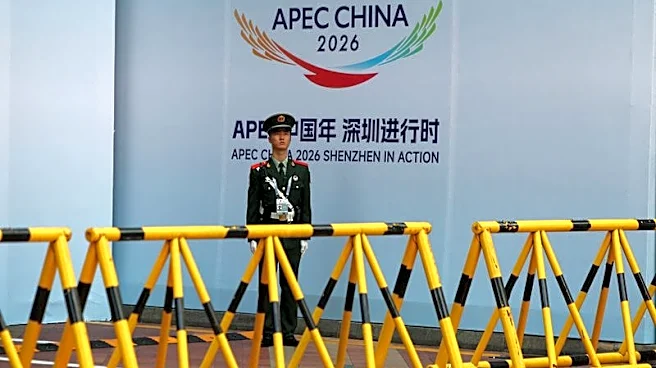
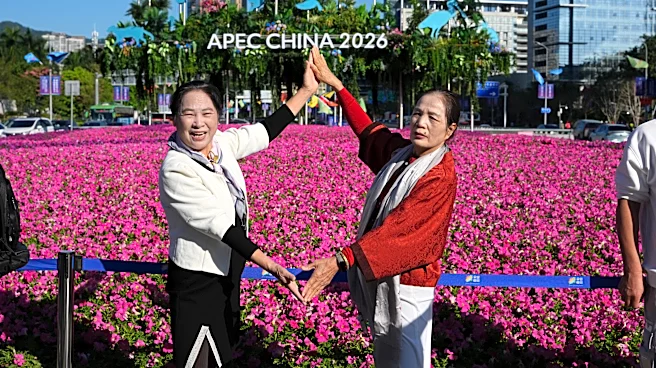
Asia-Pacific economic cooperation. The announcement was made during the 33rd Asia-Pacific Economic Cooperation (APEC) Economic Leaders' Meeting in Shenzhen, China. President Xi highlighted the Asia-Pacific region's bay areas as crucial for their open and interconnected economies, which generate positive spillover effects. Shenzhen, a part of the Guangdong-Hong Kong-Macao Greater Bay Area, is hosting the APEC meeting. Chilean President Jose Antonio Kast, attending the meeting, expressed the significance of his visit to China and his anticipation of President Xi's insights on mutual respect, equality, and independent development among nations.
Why It's Important?
This proposal by China could significantly influence global economic cooperation and regional development, particularly within the Asia-Pacific. By fostering a world association for bay areas, China aims to create a structured platform for economic integration and collaboration, potentially leading to increased trade, investment, and technological exchange among participating regions. For the U.S., this initiative could present both opportunities and challenges. It might encourage greater economic competition or collaboration in regions where U.S. interests are prominent. The emphasis on 'open and interconnected economies' and 'positive spillover effects' suggests a move towards broader economic partnerships, which could reshape existing trade dynamics and supply chains. The involvement of countries like Chile also indicates a wider appeal for such cooperation, potentially drawing more nations into China-led economic frameworks.
What's Next?
The next steps will likely involve discussions and negotiations among APEC member economies and other interested nations regarding the formation and structure of this proposed world association. President Xi's keynote speech at the APEC CEO Summit 2026 opening ceremony will likely provide further details and solicit support for the initiative. The engagement of leaders like Chilean President Kast suggests that initial interest is present, and more countries may express their willingness to participate. The focus will be on defining the scope, membership, and operational mechanisms of the association. Future APEC meetings and bilateral discussions could serve as platforms to advance this proposal, potentially leading to the establishment of a formal body aimed at facilitating economic cooperation among bay areas worldwide.
Beyond the Headlines
The proposal for a world association for bay areas economic cooperation extends beyond mere economic collaboration; it reflects China's growing influence in shaping global economic governance. By championing such an initiative, China is positioning itself as a leader in fostering interconnected regional economies, potentially offering an alternative or complementary framework to existing international economic organizations. This move could also be seen as an effort to enhance soft power and diplomatic ties by promoting a model of development that emphasizes shared growth and mutual benefit. The concept of 'bay areas' as economic powerhouses, exemplified by regions like the Guangdong-Hong Kong-Macao Greater Bay Area, could become a template for regional development strategies globally, influencing how countries approach urban planning, infrastructure development, and economic integration in coastal and metropolitan regions.