









What's Happening?
Locus Agriculture, an Ohio-based company, is broadening the application of its glycolipid-based soil conditioner, Unpac, across various row and specialty crop production systems in the United States. The product aims to address soil compaction, a prevalent
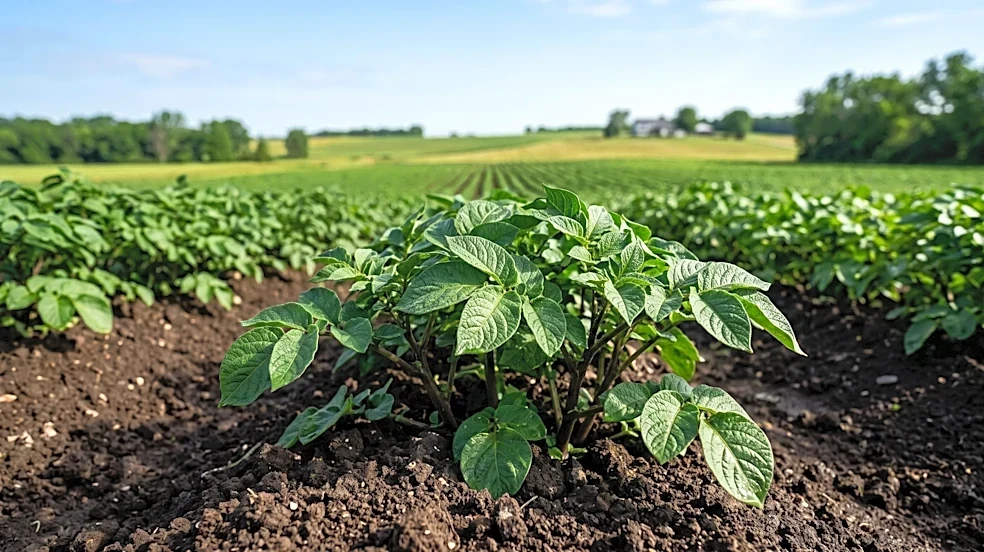
issue identified by the U.S. Department of Agriculture’s Economic Research Service as a concern on 22% of surveyed wheat, soybean, oat, and cotton fields. Dense, compacted soils hinder root development and restrict crops' access to water and nutrients. Unpac utilizes fermentation-derived glycolipid technology to reduce surface tension, thereby improving water penetration and distribution within the soil profile. This creates more favorable conditions for root growth. Third-party laboratory tests have shown that Unpac reduces soil density and enhances water penetration in agricultural soils from California's Central Coast and Central Valley. The product is being integrated into production programs for crops like potatoes, where it has reportedly led to yield increases of 10% to 15% when combined with microbial technology, and for California strawberries, where it improves root-zone conditions in raised-bed systems.
Why It's Important?
Soil compaction significantly impacts agricultural productivity and profitability across the U.S. By limiting root access to water and nutrients, it reduces crop yields and diminishes the effectiveness of other agricultural inputs such as fertilizers and crop protection products. Locus Agriculture's Unpac offers a non-mechanical solution to this widespread problem, potentially improving the return on investment for growers. The ability of Unpac to enhance water movement and root development can lead to more resilient crops, especially in regions facing water scarcity or inconsistent rainfall. This innovation is crucial for U.S. agriculture as it seeks to optimize resource use and increase efficiency in the face of environmental challenges and rising operational costs. The adoption of such technologies can contribute to sustainable farming practices by improving soil health and reducing the need for intensive mechanical tillage, which can further degrade soil structure.
What's Next?
Locus Agriculture plans to continue expanding its crop-performance portfolio, which includes biologicals, inoculants, foliar products, soil solutions, and adjuvants. The company is focused on applying its microbial and fermentation-derived technologies to develop products that support root development, nutrient efficiency, soil and water management, and spray performance throughout the crop-production cycle. Growers are encouraged to contact Locus Agriculture representatives or visit their website for more information on integrating Unpac into their existing crop management programs. The ongoing success and broader adoption of Unpac will likely depend on continued field trials demonstrating consistent yield improvements and cost-effectiveness for a wider range of crops and soil types across different U.S. agricultural regions. Further research into the long-term effects of glycolipid technology on soil ecosystems could also influence its future trajectory.
Beyond the Headlines
The development and expansion of products like Unpac highlight a broader shift in agricultural science towards leveraging biological and biochemical solutions for complex farming challenges. This approach moves beyond traditional chemical inputs and mechanical interventions, focusing instead on enhancing natural soil processes. The use of fermentation-derived glycolipid technology represents an innovative application of biotechnology in agriculture, offering a more environmentally benign alternative to some conventional methods of soil management. This trend could lead to a more holistic understanding of soil health, where the interplay between physical, chemical, and biological factors is optimized for sustainable food production. Furthermore, the success of such products could spur increased investment in agricultural biotechnology, fostering a new generation of solutions that address productivity while minimizing ecological impact and promoting long-term soil fertility.