




What's Happening?
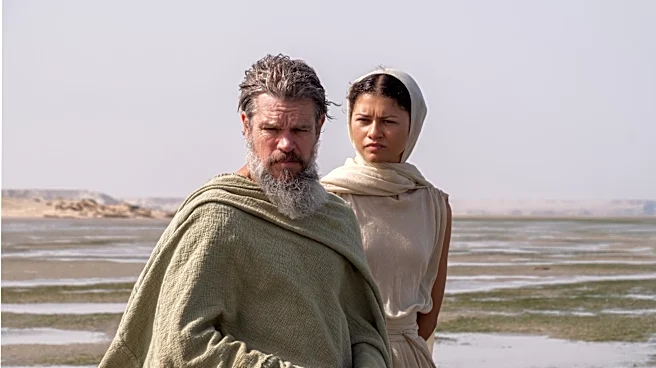
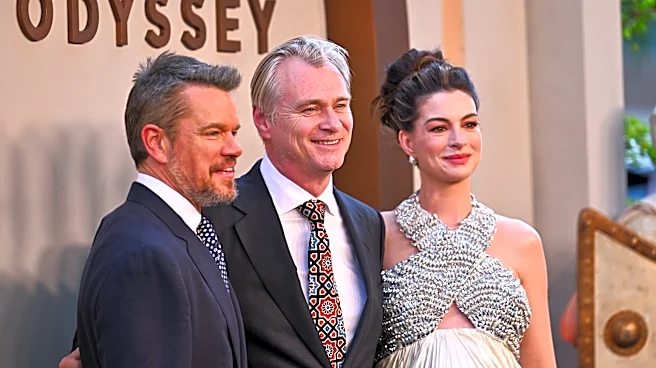
Christopher Nolan's film adaptation of 'The Odyssey' has generated significant discussion among classics scholars. The movie, which features Matt Damon as Odysseus, has been critiqued for its interpretation of the ancient epic. Emily Wilson, a classics professor
at the University of Pennsylvania, expressed concerns that the film missed essential themes of the original poem, particularly in its portrayal of Penelope. Joel Christensen, a professor at CUNY Graduate Center, noted that while the film's structure was well-executed, it presented a more conventionally 'good' Odysseus, lacking the moral complexity found in the poem. Emily Austin from the University of Chicago appreciated the introspective elements added to Odysseus' character, which are not present in the original text. The film's ending, which diverges from the poem by showing Odysseus and Penelope in self-exile, has also been a point of contention.
Why It's Important?
The film's release highlights the ongoing relevance and reinterpretation of classical literature in modern media. By adapting 'The Odyssey,' Nolan brings ancient themes into contemporary discourse, prompting discussions about fidelity to source material and the creative liberties taken in adaptations. The differing opinions among scholars underscore the challenges of translating complex literary works into film while maintaining their original depth and nuance. This debate reflects broader cultural conversations about how ancient stories are reshaped to fit modern sensibilities and the impact of these interpretations on public understanding of classical texts.
What's Next?
As the film continues to be discussed, it may influence future adaptations of classical literature, encouraging filmmakers to balance creative interpretation with fidelity to original texts. The scholarly debate may also inspire further academic exploration of how ancient narratives are adapted for modern audiences. Additionally, the film's reception could impact how studios approach the adaptation of other classical works, potentially leading to more nuanced portrayals that consider both historical context and contemporary relevance.
Beyond the Headlines
The adaptation of 'The Odyssey' raises questions about the ethical responsibilities of filmmakers when interpreting historical and literary works. The film's portrayal of characters and themes may influence public perceptions of the original text, highlighting the power of media to shape cultural narratives. This adaptation also reflects a broader trend of revisiting classical stories to explore timeless human experiences, such as heroism, morality, and the consequences of war, in a way that resonates with today's audiences.