


What's Happening?
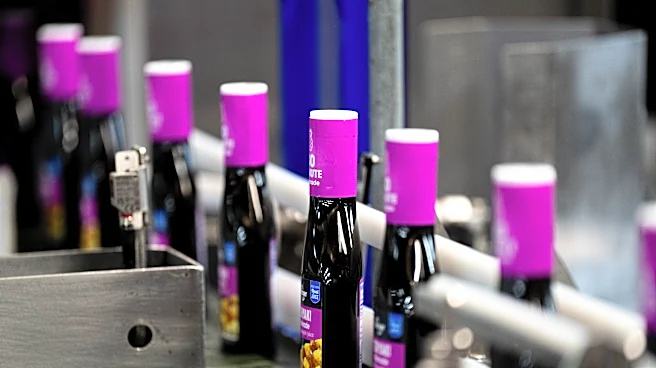
Private label brands are increasingly moving beyond their traditional role as low-cost alternatives and are now driving profit and building brand loyalty for retailers. This trend is projected to grow significantly, with national grocery chains, club
stores, mass merchandise outlets, and convenience stores actively developing their own private label offerings across various categories. According to Reid Swanson, VP, Americas Grocery & Retail, Centric Software, while Europe has a 44% private label assortment, the U.S. is currently at 21%, indicating substantial room for growth. Consumers are increasingly recognizing the value in private label products, which now include mid-tier and premium options, not just budget-friendly choices. This expansion requires retailers to develop internal expertise in areas traditionally handled by Consumer Packaged Goods (CPG) companies, such as product development, regulation, and supply chain management.
Why It's Important?
This shift is profoundly important for the U.S. consumer packaged goods industry. CPG companies are facing a significant challenge as their distribution networks transform into direct competitors. The rise of sophisticated private label brands means CPG manufacturers must intensify their focus on innovation and speed to market to maintain brand loyalty. They need to identify growth areas where private labels are gaining traction and respond with compelling new products. For consumers, this trend offers more choices, potentially higher quality products at competitive prices, and a wider range of options across different price points. Retailers stand to gain increased profit margins and enhanced customer loyalty by offering unique, store-branded products that cater to evolving consumer demands. The competitive landscape is forcing both CPGs and retailers to innovate and adapt their strategies.
What's Next?
The expansion of private label brands is expected to continue, leading to increased competition for shelf space and consumer attention. CPG companies will likely invest more heavily in research and development to create innovative products that differentiate them from private label offerings. They may also explore new marketing strategies to reinforce brand value and emotional connection with consumers. Retailers, on the other hand, will continue to build out their private label portfolios, potentially venturing into more specialized or premium categories. This could lead to a more fragmented market where brand loyalty is increasingly divided between national brands and strong private labels. The 'best product wins' mentality, as highlighted by Swanson, will drive both CPGs and retailers to prioritize quality, innovation, and responsiveness to consumer trends.
Beyond the Headlines
The deeper implication of this trend is a fundamental reshaping of the power dynamics between retailers and CPG manufacturers. Historically, CPG brands held significant leverage due to their brand recognition and marketing power. However, as retailers develop their own successful private labels, they gain more control over their product offerings, pricing, and customer relationships. This could lead to a more integrated supply chain where retailers have greater influence over product specifications and sourcing. It also raises questions about the future of brand identity and consumer trust. As private labels become more sophisticated, consumers may increasingly prioritize product quality and value over traditional brand names, potentially leading to a more discerning and less brand-loyal consumer base. This shift could also spur greater transparency and ethical sourcing practices across the industry as both CPGs and private labels compete on more than just price.