


What's Happening?
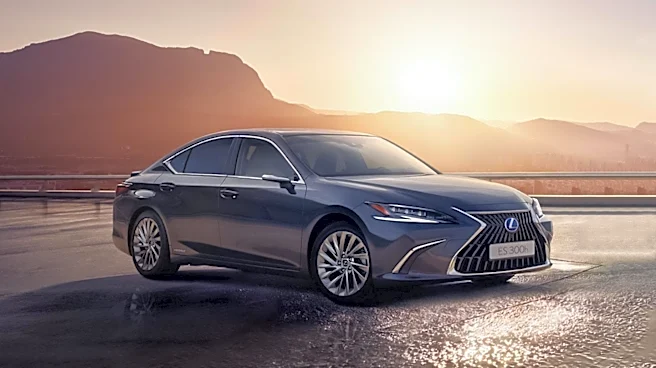
Lexus has announced the release of its 2027 ES electric sedan, with prices starting under $50,000. The new model marks the second year of the ES as a battery-electric vehicle, featuring a complete redesign based on the LF-ZC show car. The ES is available
in two grades: the ES 350e, a front-wheel-drive model, and the ES 500e, an all-wheel-drive model, both offering Premium and Luxury trims. The ES 350e is equipped with a single front-mounted electric motor delivering 221 horsepower, while the ES 500e adds a rear electric motor for a combined 338 horsepower. The ES 350e has an EPA-estimated range of up to 307 miles, and the ES 500e offers a range of 276 miles. The electric sedan can charge from 10% to 80% in about 28 minutes at DC fast-charging speeds of up to 150 kW.
Why It's Important?
The introduction of the 2027 Lexus ES electric sedan is significant as it positions Lexus competitively in the luxury electric vehicle market. With starting prices under $50,000, the ES is more affordable than rivals such as the BMW i4 and Audi A6 e-tron, potentially attracting a broader consumer base. The availability of both front-wheel and all-wheel drive options, along with a range of trims, offers consumers flexibility in choosing a model that suits their needs. The fast-charging capability enhances the practicality of the vehicle for long-distance travel, addressing a common concern among electric vehicle users. This move by Lexus reflects the growing trend among automakers to expand their electric vehicle offerings in response to increasing consumer demand and regulatory pressures for cleaner transportation options.
What's Next?
The 2027 Lexus ES models are expected to arrive at dealerships in September, providing consumers with the opportunity to purchase the latest electric sedan from Lexus. As the market for electric vehicles continues to grow, Lexus may further expand its electric lineup, potentially introducing new models or enhancing existing ones with advanced features. The competitive pricing of the ES could prompt other luxury automakers to reevaluate their pricing strategies to maintain market share. Additionally, the success of the ES could influence Lexus's future design and technology decisions, as consumer feedback and sales data will likely guide the company's approach to electric vehicle development.