





What's Happening?
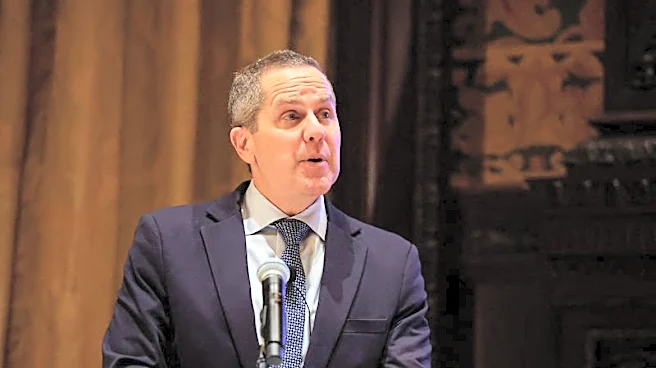
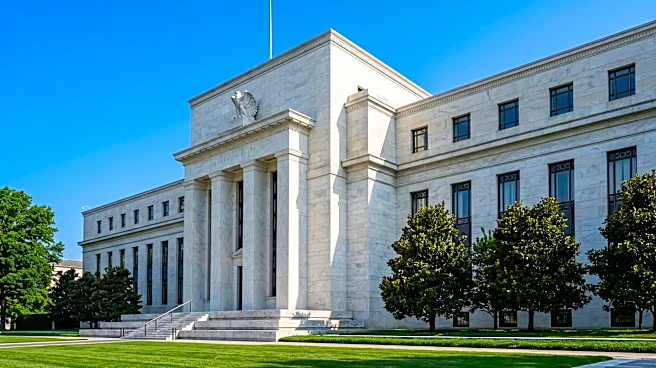
Federal Reserve Governor Michael S. Barr has indicated that the Federal Reserve System (Fed) may need to raise interest rates again if inflation does not sufficiently ease. Speaking at a banking forum in Washington, D.C., Barr, a permanent voting member
of the Federal Open Market Committee (FOMC), stated that the Fed must "move decisively to raise rates" if inflation does not slow enough. He expressed concern over inflation remaining above the Fed's 2% target for nearly five and a half years and the potential for "entrenchment of broad-based price pressures." However, Barr also noted that if future price data show a slowdown, there would be no need to rush into additional tightening, allowing the Fed more time to assess its policy stance. These remarks come as markets are increasingly wary of a potential shift back towards rate increases, especially with rising energy prices and U.S. Treasury yields. The CME FedWatch Tool currently shows a roughly 66% chance of a rate hike at the upcoming September FOMC meeting, a significant shift from July when the benchmark rate was held steady.
Why It's Important?
The potential for further interest rate hikes by the Federal Reserve carries significant implications for the U.S. economy. The federal funds rate, set by the FOMC, serves as a benchmark for nearly all other interest rates, including mortgage rates, auto loans, credit cards, corporate bonds, and government borrowing. An increase in this rate would directly impact borrowing costs for consumers and businesses, potentially slowing economic activity. For industries reliant on consumer spending or significant capital investment, higher rates could dampen demand and investment. The Fed's primary objective, as mandated by the Federal Reserve Reform Act of 1977, is to achieve maximum employment and stable prices, with stable prices defined as a 2% annual increase in the PCE price index. Persistent inflation above this target necessitates action, but aggressive rate hikes risk triggering an economic slowdown or recession. Financial markets are particularly sensitive to these signals, as evidenced by the shift in futures market expectations, indicating that investors are adjusting their strategies in anticipation of potential monetary policy tightening. This uncertainty can lead to volatility in stock markets and bond yields, affecting investment decisions and overall market stability.
What's Next?
The immediate focus will be on the upcoming September FOMC meeting, where the Federal Reserve will decide on the target range for the federal funds rate. Market participants will closely monitor economic data, particularly inflation indicators and employment figures, to gauge the likelihood of a rate hike. Governor Barr's statements suggest that the Fed's decision will be data-dependent, with a slowdown in inflation potentially leading to a pause in tightening. Conversely, continued high inflation could prompt a decisive move to raise rates. The rhetoric from other Fed officials and the release of the FOMC's economic projections will also provide further insights into the central bank's future policy direction. Businesses and consumers should prepare for potentially higher borrowing costs, which could influence investment plans, consumer spending, and housing market activity. The ongoing debate within the Fed between addressing persistent inflation and monitoring signs of economic weakness will continue to shape monetary policy in the coming months.
Beyond the Headlines
The current situation highlights the delicate balancing act faced by the Federal Reserve in managing its dual mandate of stable prices and maximum employment. The prolonged period of inflation above the 2% target raises questions about the effectiveness of previous monetary policy interventions and the potential for inflation expectations to become entrenched. If the market perceives that the Fed is losing its grip on inflation, it could lead to a loss of confidence in the central bank's credibility, potentially exacerbating inflationary pressures as investors demand higher returns to compensate for anticipated price increases. The impact of higher interest rates on the national debt is also a significant long-term concern. As the average interest rate on outstanding debt rises, the government's interest payments increase substantially, potentially crowding out other essential spending and contributing to future fiscal challenges. This dynamic underscores the broader economic and fiscal implications of the Fed's monetary policy decisions, extending beyond immediate market reactions to influence the long-term health and stability of the U.S. economy.