





What's Happening?
NPR's Sacha Pfeiffer hosted a discussion with producers Gabriel Sánchez and Brianna Scott, both self-proclaimed horror fans, about the appeal of horror movies and the films that continue to scare them. With Halloween approaching, the conversation explored
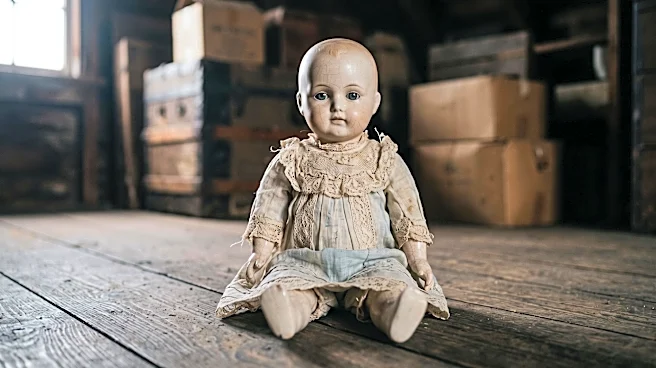
why people are drawn to being frightened by films. Brianna Scott shared that she has watched horror movies since a young age, seeking the 'tense, anxious, excited feelings' they evoke. She expressed a desire to be 'in the middle of a horror movie' and viscerally experience what characters go through. Gabriel Sánchez highlighted the importance of a balance between drama, terror, and comedy in a good horror film, noting that constant scares can be overwhelming. Both producers discussed specific movies that have left a lasting impression, such as 'The Exorcist' and 'Evil Dead' for Scott, and 'Child's Play' for Sánchez, which made him distrust dolls.
Why It's Important?
This discussion provides insight into the psychological and cultural appeal of horror cinema, particularly as Halloween approaches. It highlights how horror films serve as a unique form of entertainment that allows audiences to confront fears in a controlled environment, experiencing adrenaline rushes and intense emotions without real-world danger. The enduring popularity of classic horror films like 'The Exorcist,' 'Evil Dead,' and 'Child's Play' demonstrates their lasting impact on viewers and their ability to tap into universal anxieties, such as possession, gore, and the uncanny. The conversation also touches on the generational aspect of horror, with Sánchez recalling watching R-rated films as a child and the lasting effects on his perception. Understanding these dynamics is important for the entertainment industry, as it informs the creation and marketing of new horror content, ensuring it resonates with audiences seeking both thrills and deeper psychological engagement.
What's Next?
As Halloween nears, the conversation naturally leads to recommendations for viewers. Brianna Scott, despite the host's request for 'horror-light' options, recommended 'Hellraiser,' praising its storytelling, practical effects, and daring nature, noting its focus on intrigue rather than jump scares. Gabriel Sánchez suggested 'Psycho' and 'Halloween' as entry points, considering 'Psycho' relatively 'light' by modern standards, though acknowledging that tolerance for horror is subjective. These recommendations cater to different levels of scare tolerance, from those seeking intense experiences to those wanting a milder fright. The ongoing interest in horror, as evidenced by this discussion, suggests a continued demand for diverse horror content, from psychological thrillers to gore-heavy films. Future trends in the genre may continue to explore new ways to scare and engage audiences, building on the foundations laid by these classic films.
Beyond the Headlines
The discussion delves into the deeper psychological and cultural functions of horror. Brianna Scott's desire to 'viscerally feel what these characters are going through' speaks to the cathartic potential of horror, allowing individuals to process anxieties and fears in a safe space. Gabriel Sánchez's experience with 'Child's Play' and his subsequent distrust of dolls illustrates how horror can imprint on the subconscious, shaping perceptions and even phobias. The conversation also subtly touches on the ethical considerations of exposing children to horror, as Sánchez reflects on his own childhood experiences and his approach as a father. This highlights the ongoing debate about media consumption and its impact on psychological development. Ultimately, horror films, beyond their entertainment value, serve as cultural artifacts that reflect societal fears, taboos, and the human fascination with the unknown, offering a lens through which to explore the darker aspects of the human condition.