

What's Happening?
Hyundai Motor America announced record-breaking sales for October 2026, with total sales reaching 73,452 vehicles, marking a 5% increase compared to October 2025. Retail sales also hit an October record of 62,646 units, up 9% year-over-year. This growth
was significantly propelled by strong performances in several key models, including the Santa Fe, which saw a 52% increase, Kona and IONIQ 5, both up 21%, Elantra with a 17% rise, and Palisade increasing by 14%. Both Santa Fe and Palisade, particularly their hybrid powertrains, achieved new October sales records. Hyundai's hybrid lineup as a whole experienced a 20% surge in sales, setting a new October record and contributing to 29% of the total sales volume for the month. Year-to-date figures show Hyundai's total sales at 770,916, a 3% increase from the previous year, with hybrid sales up by an impressive 50% over the same period. Randy Parker, president and CEO of Hyundai Motor North America, attributed this success to strong customer response across their diverse lineup, emphasizing the growing consumer preference for Hyundai vehicles, especially hybrids.
Why It's Important?
This sales performance by Hyundai Motor America is significant as it indicates a robust consumer demand for their vehicles, particularly in the hybrid and SUV segments, within the U.S. market. The substantial increase in hybrid sales (20% for October and 50% year-to-date) highlights a broader market trend towards more fuel-efficient and environmentally conscious vehicle options. This trend benefits Hyundai by positioning them as a strong contender in the evolving automotive landscape, where electrification is becoming increasingly crucial. The strong sales of models like Santa Fe and Palisade, which also set new records with their hybrid options, suggest that Hyundai's strategy of offering diverse powertrain choices is resonating with American consumers. This success can lead to increased market share for Hyundai, potentially impacting competitors in the SUV and hybrid vehicle categories. Furthermore, Hyundai's continued investment in U.S. operations, including manufacturing plants and R&D facilities, underscores its commitment to the American market, which could translate into job creation and economic contributions in the regions where they operate.
What's Next?
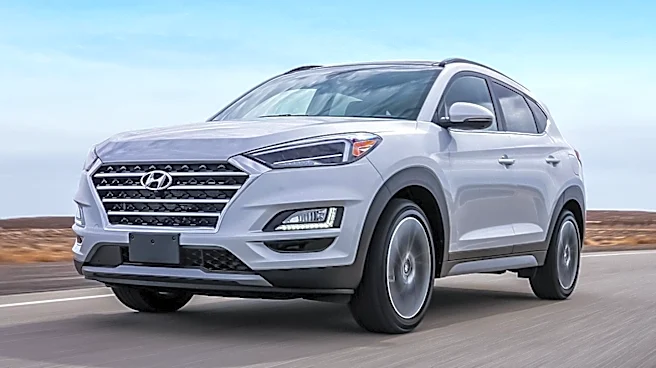
Following this strong sales performance, Hyundai Motor America is likely to continue its focus on expanding its electrified vehicle offerings and enhancing its SUV lineup. The company recently unveiled the all-new Tucson, featuring a next-generation hybrid system and new infotainment technology, which is expected to reach North America in 2027. This indicates a strategic move to maintain momentum in the hybrid market and introduce advanced features to attract more buyers. Hyundai is also investing approximately $450 million in its Montgomery, Alabama plant to support future vehicles, expanded engine production, and new propulsion technology, signaling a commitment to increasing production capacity and technological innovation within the U.S. These investments and new product introductions suggest that Hyundai aims to further solidify its position in the competitive U.S. automotive market, particularly in the hybrid and SUV segments. Competitors will likely observe Hyundai's success and potentially adjust their own strategies to compete with Hyundai's growing market presence and focus on electrification.
Beyond the Headlines
Hyundai's record October sales, particularly the surge in hybrid vehicle demand, reflect a deeper shift in consumer preferences and the automotive industry's direction. The significant year-over-year growth in hybrid sales suggests that while fully electric vehicles are gaining traction, hybrid models continue to serve as a crucial bridge for consumers transitioning away from traditional gasoline-powered cars. This indicates a pragmatic approach by many buyers who seek improved fuel efficiency and reduced emissions without the full commitment or infrastructure requirements of a pure EV. Hyundai's success in this segment highlights the importance of offering a diverse range of powertrain options to cater to varying consumer needs and preferences. This trend could also influence public policy discussions around charging infrastructure and incentives for different types of electrified vehicles, as hybrids demonstrate a strong market viability. The company's ongoing investments in U.S. manufacturing and R&D also underscore a long-term strategy to localize production and innovation, potentially strengthening the domestic automotive supply chain and technological capabilities.