




What's Happening?
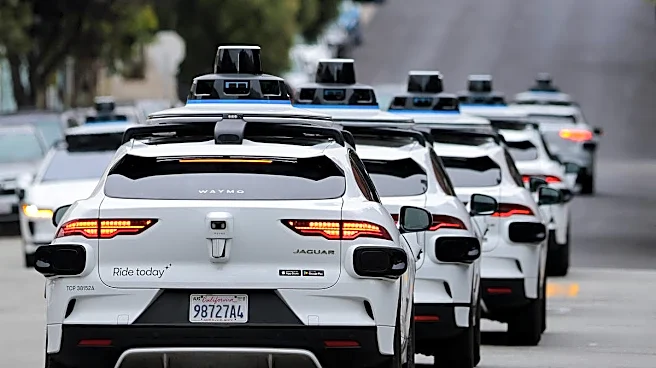
Waymo's driverless cars have been recognized for their safety performance, with an independent analysis revealing that these vehicles are involved in significantly fewer crashes compared to human-driven cars. The Insurance Institute for Highway Safety
conducted a study across four major U.S. cities—San Francisco, Phoenix, Los Angeles, and Austin—and found that Waymo's robotaxis had 68% fewer police-reportable crashes per mile. The study highlighted a reduction in single-vehicle wrecks by 85% and crashes with injuries by 81%. However, the results varied by city, with Phoenix showing a 76% drop in crashes, while Austin had a slightly higher crash rate for robotaxis.
Why It's Important?
The findings underscore the potential of autonomous vehicles to enhance road safety, which could lead to reduced traffic accidents and fatalities. This advancement in driverless technology may accelerate the adoption of autonomous vehicles, influencing transportation policies and urban planning. The improved safety record of Waymo's vehicles could bolster public confidence in driverless technology, encouraging further investment and development in the sector. Additionally, the reduction in accidents could have economic benefits, such as lower insurance costs and decreased healthcare expenses related to traffic injuries.
What's Next?
As driverless technology continues to evolve, regulatory frameworks will need to adapt to accommodate these advancements. Policymakers may consider revising traffic laws and safety standards to integrate autonomous vehicles into the transportation ecosystem. Waymo and other companies in the sector are likely to expand their operations and testing to additional cities, potentially leading to broader deployment of driverless cars. Ongoing research and development will focus on improving the technology's reliability and addressing challenges such as cybersecurity and public acceptance.