


What's Happening?
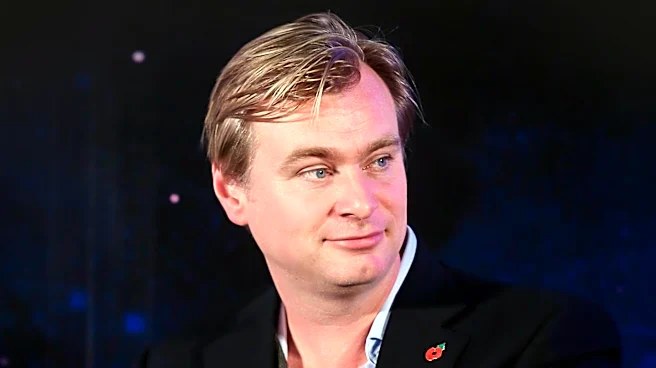
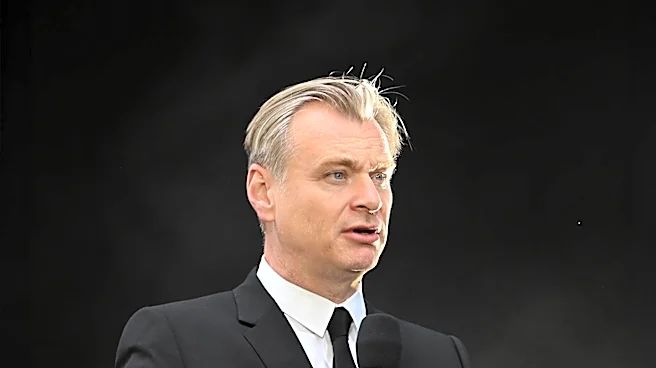
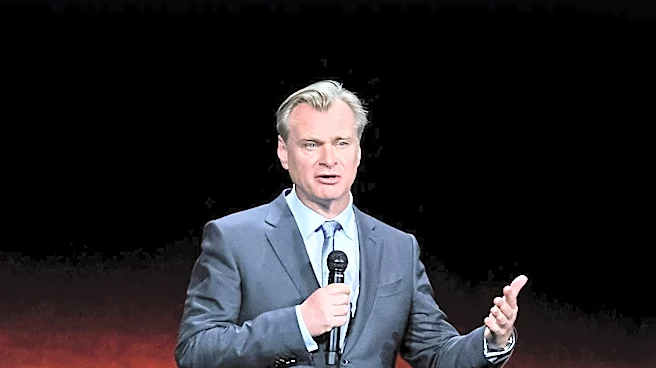
Emily Wilson, a renowned scholar and translator of Homer's 'The Odyssey,' has faced criticism from author Joyce Carol Oates for her harsh review of Christopher Nolan's film adaptation. Wilson described the film as 'abysmal' and lacking depth, which Oates argued
echoed the rhetoric of MAGA supporters. Oates suggested that Wilson's dismissive tone was reminiscent of right-wing critiques, particularly those targeting the film's diverse casting choices. The controversy highlights the intersection of cultural criticism and political discourse, as Wilson's comments have been interpreted as aligning with conservative backlash against the film's perceived 'wokeness.' Despite the criticism, Wilson's translation of 'The Odyssey' has gained popularity, partly due to the film's release.
Why It's Important?
The debate surrounding Wilson's comments and the film adaptation of 'The Odyssey' reflects broader cultural tensions in the U.S. over representation and diversity in media. The backlash against the film's casting choices underscores ongoing disputes about inclusivity and historical accuracy in storytelling. This incident also illustrates how cultural products can become battlegrounds for political ideologies, with interpretations and critiques often influenced by broader societal debates. The response to Wilson's review highlights the challenges faced by scholars and creators in navigating these complex cultural landscapes, where artistic expression and political identity frequently intersect.
Beyond the Headlines
The controversy over 'The Odyssey' adaptation raises questions about the role of translators and scholars in shaping public discourse. As cultural intermediaries, they have the power to influence perceptions and interpretations of classic works. Wilson's critique, while focused on artistic merit, has been drawn into a larger political narrative, illustrating the potential for academic commentary to be co-opted by ideological agendas. This situation also points to the evolving nature of cultural criticism, where traditional boundaries between scholarship and public discourse are increasingly blurred. The incident serves as a reminder of the responsibilities and challenges faced by those who engage with cultural texts in a highly politicized environment.