

What's Happening?
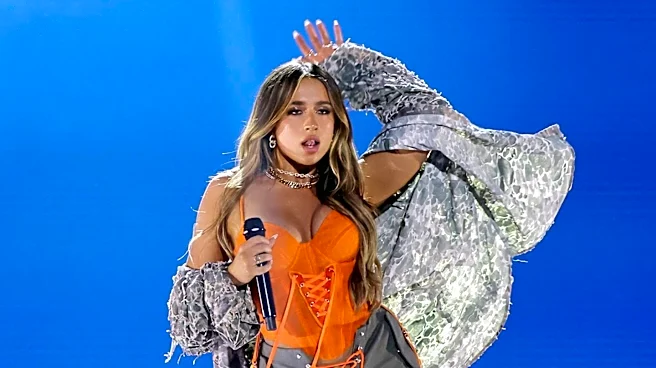
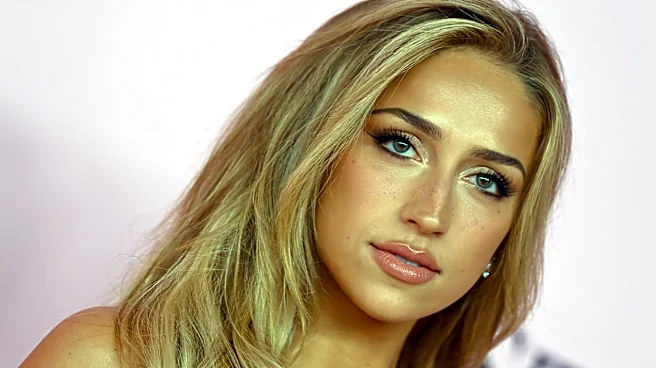
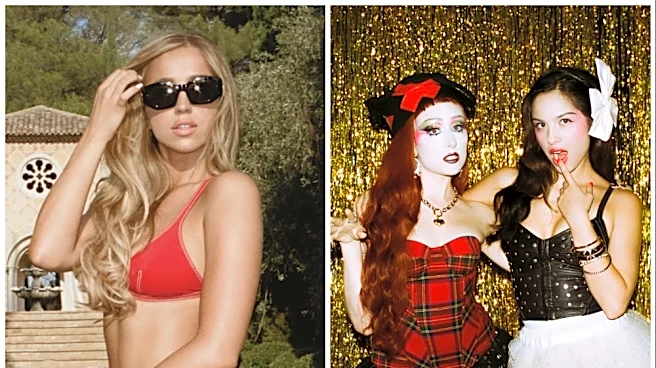
Tate McRae's new pop hit, 'Housewife,' has become a trending sound on TikTok, but its intended message is being misinterpreted by a segment of users. The song, which features McRae singing about wanting to make a lot of money and be her 'own housewife,'
is being used by 'trad wife' creators to idealize traditional gender roles in marriage and family. Some users have even altered the lyrics to 'Be my man's housewife' to fit their narrative. This trend has sparked debate, with many creators pointing out the irony of co-opting a song with a feminist message to promote opposing views. The song's album cover, which depicts McRae pushing a baby stroller full of cash, further emphasizes its original theme of financial independence and self-sufficiency.
Why It's Important?
This phenomenon highlights the complex and often contradictory ways in which content is consumed and reinterpreted on social media platforms like TikTok. It underscores the power of user-generated content to reshape narratives, sometimes diverging significantly from the creator's original intent. For artists, this can lead to their work being associated with messages they do not endorse, potentially impacting their public image and the reception of their art. For society, it reflects ongoing cultural debates about gender roles, feminism, and traditional values, which are amplified and contested within digital spaces. The 'trad wife' trend itself represents a growing, albeit controversial, movement that advocates for a return to more conventional domestic roles for women, and its appropriation of popular culture signals its attempt to gain mainstream visibility and legitimacy.
What's Next?
The debate surrounding the 'Housewife' trend on TikTok is likely to continue as more users engage with the song and its various interpretations. Artists and their teams may need to consider strategies for managing how their work is used on social media, especially when it deviates from their intended message. This could involve issuing statements, engaging directly with fans, or creating additional content to clarify their artistic vision. For TikTok, such trends underscore the platform's role as a significant cultural arbiter and a space where diverse, sometimes conflicting, ideologies clash. The platform may face ongoing challenges in moderating content and ensuring that trends do not inadvertently promote harmful or misleading narratives, while also preserving freedom of expression for its users.
Beyond the Headlines
Beyond the immediate controversy, this incident reveals deeper insights into the dynamics of digital culture and the evolving relationship between creators and their audience. The ease with which content can be recontextualized on platforms like TikTok means that artistic intent is often just one of many factors shaping a work's meaning. This can lead to a democratization of interpretation, but also to a fragmentation of meaning, where a single piece of content can simultaneously represent multiple, even opposing, viewpoints. It also highlights the generational divide in understanding and expressing feminism, with younger audiences often engaging with these concepts through the lens of personal choice and individual empowerment, which can sometimes be at odds with collective feminist movements. The 'Housewife' trend serves as a case study in how digital platforms become arenas for negotiating and redefining cultural values in real-time.