






What's Happening?
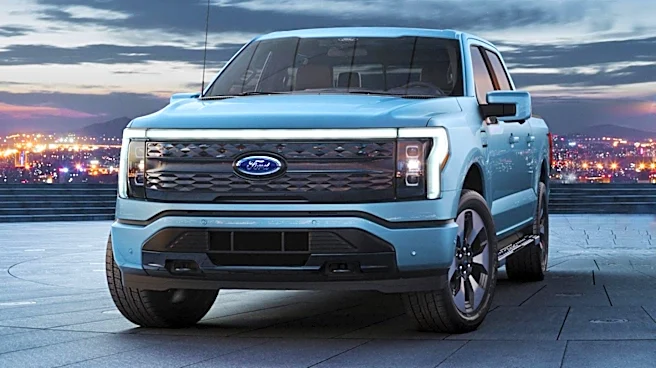
Ford has initiated production testing of its Fathom electric pickup trucks at its Louisville Assembly Plant, marking a significant step towards the vehicle's late-2027 delivery schedule. According to Ford COO Kumar Galhotra, 90% of the validation testing for
the Fathom is complete, with the first production line vehicles already built. This process involves a new manufacturing technique, dubbed an 'assembly tree,' which differs from the traditional assembly line. Instead of a linear process, the front, middle, and rear sections of the pickup are assembled simultaneously before being joined. Additionally, Ford's Shelbyville Technical Center is producing large aluminum castings, replacing 146 individual parts with just two large castings, aiming to reduce production complexity and cost. Over $2 billion has been invested in the Louisville plant for Fathom manufacturing, and 5,000 unicastings have already been produced.
Why It's Important?
This new manufacturing approach by Ford, particularly the 'assembly tree' method and the use of large-scale aluminum unicastings, represents a significant shift in automotive production. If successful, it could lead to faster and more efficient vehicle manufacturing, potentially allowing Ford to achieve its target of 100,000 Fathom sales in the first year. The reduction in parts through unicastings could lower production costs, making electric vehicles more affordable and competitive in the market. However, this design also introduces potential risks, as large aluminum unicastings are difficult to repair after collisions, which could lead to higher insurance premiums and increased total-loss declarations for consumers and insurers. This trade-off between manufacturing efficiency and repairability will be a critical factor in the long-term economic impact of such vehicles.
What's Next?
Ford plans to continue refining its 'assembly tree' manufacturing process and ensuring the supply chain can meet the demands of high-volume production. The company has approximately a year before customer deliveries are slated to begin in late 2027, providing time to scale up operations and ensure the new production methods are running smoothly. The next challenge, as highlighted by Ford COO Kumar Galhotra, is to ensure the supply base can deliver high-quality parts at the required rate. The success of the Fathom and its underlying Universal Electric Vehicle Platform will be crucial for Ford's electric future, as the automaker has heavily invested in this new approach to EV manufacturing.
Beyond the Headlines
The adoption of large-scale aluminum unicastings by Ford, similar to Tesla's Gigacasting process, signifies a broader industry trend towards simplifying manufacturing and reducing costs in EV production. While this innovation promises efficiency and affordability, it also raises deeper implications regarding vehicle repairability and sustainability. The increased likelihood of total-loss declarations for moderately damaged vehicles could lead to more vehicles being scrapped rather than repaired, potentially increasing waste and challenging the environmental benefits of EVs. This trend could also reshape the automotive insurance industry, requiring new assessment models and potentially leading to higher costs for consumers. The long-term success of this manufacturing paradigm will depend on balancing production efficiency with practical considerations for vehicle longevity and repair.