






What's Happening?
MIND Security, an Israeli cybersecurity startup, has successfully raised $72 million in a Series B funding round, bringing its total funding since 2023 to over $112 million. This significant investment comes as companies increasingly grapple with the
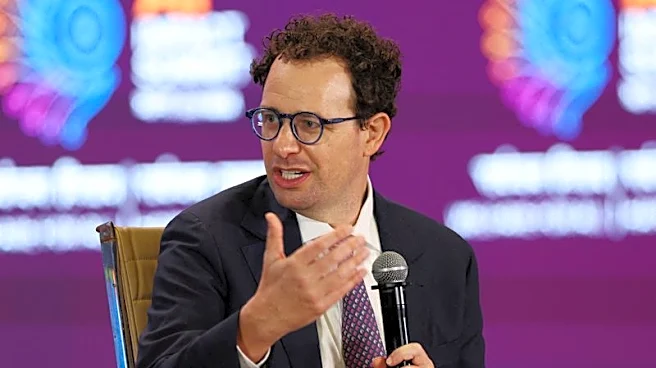
challenge of preventing sensitive corporate information from leaking through generative AI tools and autonomous AI agents. MIND specializes in data loss prevention (DLP) software designed to identify, monitor, and block inappropriate sharing of sensitive data across various platforms, including SaaS applications, AI tools, employee endpoints, email, and on-premises file servers. The company's CEO, Eran Barak, highlighted that traditional DLP systems were not built for the 'AI era,' where employees upload documents to external AI services and AI agents access internal databases with limited human oversight. MIND's solution uses AI to analyze both information and context, aiming to reduce false alarms and automate routine security tasks.
Why It's Important?
The substantial funding for MIND underscores the escalating urgency for robust data security solutions in the U.S. and global business landscape, driven by the rapid adoption of generative AI. As U.S. companies integrate AI tools to boost productivity, they face unprecedented risks of data breaches and intellectual property loss. MIND's technology directly addresses a critical vulnerability: the potential for sensitive corporate data to be inadvertently or maliciously exposed through AI interactions. The fact that 65% of organizations are reportedly not confident in their existing security systems to protect against AI-related risks highlights a significant gap in current cybersecurity defenses. This investment signifies a growing recognition within the U.S. market and among investors that traditional security measures are insufficient for the AI-driven environment, creating a demand for specialized, AI-native DLP solutions. The success of MIND could influence U.S. cybersecurity strategies and product development, pushing for more advanced, context-aware security tools.
What's Next?
MIND plans to utilize the new funding to expand its sales and marketing efforts, develop additional product capabilities, and build partnerships with other technology vendors and distributors. This expansion will likely increase its presence and offerings within the U.S. market, catering to Fortune 500 companies and other businesses grappling with AI-driven data security challenges. The company also intends to double its Israeli product and development teams, indicating a continued focus on innovation in AI-native security. The broader cybersecurity market is expected to see continued investment in solutions designed around generative AI, as companies seek to balance the productivity gains of AI with the imperative of data protection. This trend suggests a future where AI-powered security tools become standard for enterprises, evolving to counter increasingly sophisticated AI-driven threats and vulnerabilities.
Beyond the Headlines
The rise of companies like MIND highlights a fundamental shift in the cybersecurity paradigm, moving from reactive defense to proactive, AI-powered threat anticipation. The ethical implications of AI agents accessing and processing sensitive corporate data with limited human involvement are profound, raising questions about accountability, transparency, and potential biases in automated security decisions. The challenge of distinguishing legitimate activity from potential leaks in an AI-driven environment requires sophisticated contextual understanding, pushing the boundaries of current AI capabilities. Furthermore, the rapid evolution of AI tools means that cybersecurity solutions must be continuously updated and adapted, creating an ongoing arms race between AI-powered threats and defenses. This dynamic could lead to a greater reliance on AI in security operations, potentially transforming the role of human security analysts and requiring new regulatory frameworks to govern AI's use in data protection.