





What's Happening?
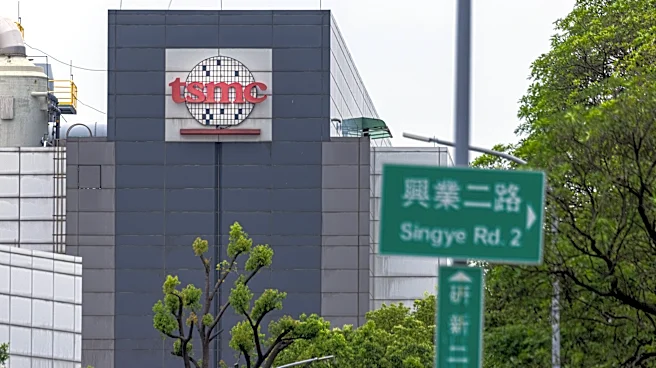
Taiwan Semiconductor Manufacturing Company Ltd. (NYSE:TSM) has received a consensus 'Buy' rating from sixteen analysts covering the firm, according to Marketbeat Ratings. This includes one hold rating, twelve buy ratings, and three strong buy ratings.
The average twelve-month price target set by these brokerages is $533.89. TSM recently announced its quarterly earnings, reporting $4.60 earnings per share (EPS), surpassing analysts' consensus estimates of $4.45 by $0.15. The company's revenue for the quarter was $46.72 billion, exceeding analyst estimates of $45.67 billion, marking a 41.2% year-over-year increase. Taiwan Semiconductor Manufacturing also reported a net margin of 51.51% and a return on equity of 41.08%. Analysts predict the company will post 17.36 EPS for the current year. Additionally, the company recently declared an increased quarterly dividend of $1.3663 per share, up from $1.0854, to be paid on April 8th to investors of record on March 11th. Insider activity shows VP Lee-Chung Lu acquired 5,000 shares, and Director Michael R. Splinter acquired 840 shares.
Why It's Important?
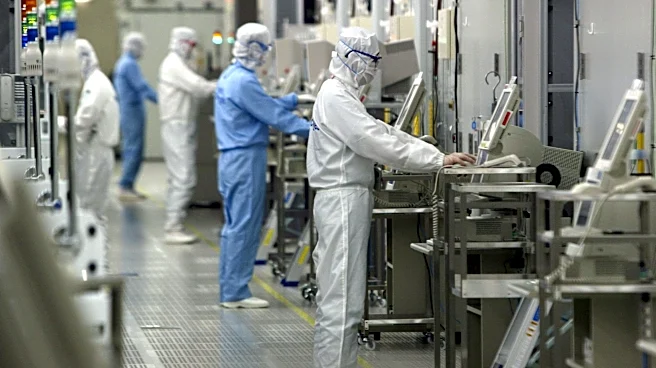
TSM's strong financial performance and positive analyst ratings underscore its critical role in the global technology supply chain, particularly for the U.S. economy. As the world's largest contract chip manufacturer, TSM's stability and growth directly impact numerous U.S. tech companies that rely on its advanced semiconductor production. The potential $22.6 billion investment in a Texas plant, though contingent on tax breaks and incentives, highlights efforts to onshore critical manufacturing capabilities, which could enhance U.S. economic security and reduce reliance on overseas production for essential components. This move would also create high-tech jobs and foster innovation within the U.S. The increased dividend payout reflects the company's robust profitability and commitment to shareholder returns, making it an attractive investment for U.S. institutional and individual investors. However, the 'Neutral Sentiment' regarding the Texas plant indicates that the U.S. government's support through incentives is crucial for such large-scale domestic investments to materialize.
What's Next?
Taiwan Semiconductor Manufacturing is weighing a significant investment in a roughly $22.6 billion plant in Texas. This proposal is contingent on securing tax breaks and other incentives from U.S. authorities. The company's decision on this U.S. expansion will be a key development to watch, as it could significantly impact domestic semiconductor manufacturing capacity. Analysts will continue to monitor TSM's financial performance, particularly its ability to maintain strong earnings and revenue growth amidst a volatile chip market. The upcoming dividend payment on April 8th will be processed, and future dividend declarations will be anticipated by investors. The ongoing discussions and negotiations regarding the Texas plant's incentives will be a critical factor in determining the next steps for TSM's U.S. footprint.
Beyond the Headlines
TSM's potential expansion into the U.S. is more than just a business decision; it's a strategic geopolitical move. The U.S. government has been actively pushing for increased domestic semiconductor manufacturing to reduce vulnerabilities in the supply chain, especially given rising tensions with China. A TSM plant in Texas would symbolize a significant step towards this goal, bolstering U.S. technological independence and national security. However, the reliance on substantial government incentives raises questions about the long-term sustainability of such ventures without ongoing public support. This situation highlights the complex interplay between economic policy, national security, and global trade in the high-stakes semiconductor industry. The success of such a plant could also set a precedent for other foreign tech giants considering U.S. investments, potentially reshaping the landscape of American manufacturing and innovation.