






What's Happening?
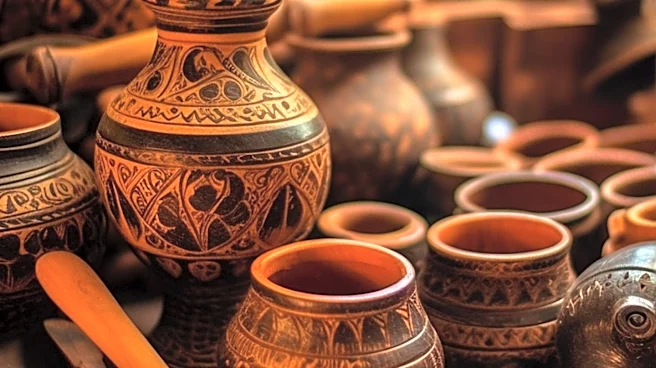
Kashmiri pottery, a traditional craft historically practiced by hereditary potters known as 'kral,' is experiencing a modest revival. This craft involves shaping local clay on a wheel and firing it in kilns to create various items, including the earthen
pot found inside every kangri (a traditional firepot), water and cooking pots, and the body of the tumbaknari drum. The craft has seen a significant decline over the years due to the widespread adoption of cheaper, unbreakable utensils made from aluminum, steel, and plastic. Urbanization also contributed to the decline by reducing the open spaces needed for kilns. Many young people from potter families have moved to other professions, and the trade's standing diminished. However, recent reports indicate a renewed interest, with new outlets opening and studios like Kral Koor introducing modern design ideas to the craft. Decorative pieces, glazed tableware for hotels, and small souvenirs are finding a market in Srinagar and other tourist centers.
Why It's Important?
The revival of Kashmiri pottery is significant for cultural preservation and economic diversification in the region. This traditional craft is deeply embedded in Kashmiri heritage, with place names like Kralpora and Kral Sangri reflecting its historical importance. Its decline represented a loss of cultural identity and traditional skills. The current resurgence, though modest, helps maintain a connection to the region's past and provides economic opportunities for artisans. By adapting to modern demands with decorative pieces and tableware, the craft can attract new consumers and contribute to the local economy, particularly through tourism. This shift also highlights the potential for traditional crafts to evolve and find relevance in contemporary markets, offering a model for other declining artisanal industries.
What's Next?
The future of Kashmiri pottery will likely involve continued efforts to innovate and market its products to a broader audience. The success of new studios and the demand for decorative and functional pieces in tourist centers suggest a path forward. Further integration with the tourism sector, perhaps through craft workshops or demonstrations, could enhance its visibility and appeal. Additionally, support for artisans in terms of training, access to modern tools, and market linkages could accelerate the revival. The challenge will be to balance traditional techniques with contemporary design to ensure the craft remains authentic while appealing to modern tastes. Continued reporting on its progress will be crucial to understanding its long-term sustainability.
Beyond the Headlines
The story of Kashmiri pottery's decline and revival reflects broader themes of globalization's impact on traditional crafts and the resilience of cultural heritage. The shift from essential household items to decorative and souvenir pieces illustrates how traditional industries must adapt to survive in a changing economic landscape. This revival also touches upon the ethical considerations of preserving indigenous knowledge and skills in the face of modernization. The renewed interest in handmade, locally sourced products, driven by a desire for authenticity and sustainability, could further bolster such crafts. It underscores the importance of community-led initiatives and entrepreneurial spirit in safeguarding cultural practices that might otherwise be lost to economic pressures.