






What's Happening?
G.F. Händel's opera 'Ariodante,' originally written in 1735 for London's Covent Garden theatre, is being presented in a new production that shifts its setting from medieval Scotland to Victorian London. This adaptation, directed by George Petrou, draws
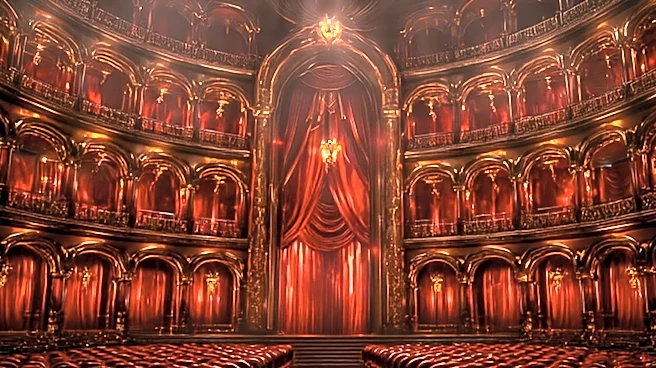
inspiration from Bram Stoker's 'Dracula,' infusing the Baroque opera with an atmosphere of Gothic horror. The plot, based on Ludovico Ariosto’s 'Orlando furioso,' revolves around Duke Polinesso's deception of knight Ariodante, leading him to believe Princess Ginevra is unfaithful. The production aims to explore themes of psychological violence, manipulation, and primal lust within the strict moral codes of the Victorian era. Nicolò Balducci, a leading countertenor, performs the title role, which Händel originally composed for Giovanni Carestini. The opera is widely recognized for its dramatic depth, demanding vocal requirements, and melodious score, making it a regular feature on international stages.
Why It's Important?
This reinterpretation of 'Ariodante' is significant as it offers a fresh perspective on a classic Baroque opera, potentially attracting new audiences while engaging existing opera enthusiasts with its innovative thematic approach. By transplanting the narrative into Victorian London and incorporating elements of Gothic horror, the production highlights the timelessness of the opera's core conflicts between duty and emotion, transforming them into themes of paranoia, obsession, and nightmarish delirium. This creative choice by director George Petrou, a renowned interpreter of Händel's music, demonstrates how historical works can remain relevant through contemporary staging and thematic exploration. The shift in setting also allows for a deeper examination of societal pressures, particularly the gender inequalities of the Victorian era, where men enjoyed romantic freedoms while women faced condemnation and submission, adding a layer of social commentary to the performance.
What's Next?
The production of G.F. Händel's 'Ariodante' is a co-production between the Göttingen International Handel Festival and Megaron the Athens Concert Hall. Following its initial run, it is likely that this innovative staging will be considered for performances at other major opera houses and festivals globally, given the opera's popularity and the director's reputation. The use of Greek and English surtitles indicates an effort to make the production accessible to a broader international audience. The critical reception of this Gothic-inspired interpretation will be crucial in determining its future touring potential and influence on subsequent productions of Baroque operas. Opera companies often seek successful and critically acclaimed productions for their seasons, and this unique take on 'Ariodante' could become a sought-after presentation.
Beyond the Headlines
The decision to set 'Ariodante' in Victorian London with a Gothic horror aesthetic delves into deeper cultural and psychological implications. It suggests that the universal themes of love, betrayal, and manipulation found in Ariosto's epic and Händel's opera can be powerfully amplified by the specific anxieties and moral hypocrisies of the Victorian era. The puritanism and strict social codes of the period provide a stark contrast to the raw emotions and deceptions at the heart of the plot, intensifying the psychological violence and manipulation depicted. This artistic choice also highlights the enduring influence of Bram Stoker's 'Dracula' as a cultural touchstone for exploring themes of evil, desire, and societal repression, demonstrating how different artistic forms can converge to create a richer, more complex narrative experience. It challenges traditional interpretations of Baroque opera, pushing boundaries and inviting audiences to consider the darker aspects of human nature within a historical context.