





What's Happening?
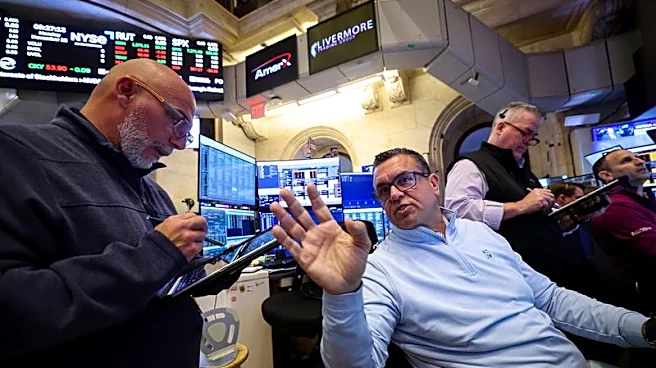
A major tech selloff, primarily impacting artificial intelligence (AI) stocks, led to a collective loss of over A$380.5 billion for billionaires on Wednesday. This downturn saw Nvidia's shares drop by more than 8%. According to Forbes estimates, 1,738
billionaires experienced wealth reduction. A substantial portion of these losses, approximately A$202.1 billion, was concentrated among eight prominent tech billionaires: Elon Musk (SpaceX and Tesla), Larry Page (Google), Jeff Bezos (Amazon), Jensen Huang (Nvidia), Sergey Brin (Google), Larry Ellison (Oracle), Michael Dell (Dell), and Mark Zuckerberg (Meta). Elon Musk, the world's wealthiest individual, led the losses, with his net worth initially decreasing by A$97.1 billion as SpaceX shares fell by 7.1% and Tesla shares by 5.1%. Jensen Huang's net worth also declined by roughly A$14.5 billion, while Larry Ellison's fortune shed A$14.6 billion, causing Oracle's stock price to plummet by 8%.
Why It's Important?
This significant wealth reduction among leading tech billionaires underscores the volatility and interconnectedness of the U.S. stock market, particularly within the rapidly evolving AI sector. The substantial losses experienced by key figures like Elon Musk, Larry Page, and Jeff Bezos can influence investor confidence and potentially impact future investment in technological innovation. The downturn in major indexes, including the tech-heavy Nasdaq (down 4.2%), the S&P 500 (down 2.8%), and the Dow Jones Industrial Average (down 1.6%), indicates broader market concerns about the sustainability of the AI trade. This event highlights how quickly market sentiment can shift, affecting not only individual fortunes but also the valuation of major U.S. technology companies and the broader economic landscape. The performance of these companies often serves as a barometer for the health of the U.S. economy.
What's Next?
The immediate future will likely involve continued scrutiny of AI-related stocks and broader market trends. Investors and analysts will be closely watching for signs of stabilization or further declines in the tech sector. The performance of companies like Nvidia, Tesla, and Oracle will be critical indicators. The market's reaction to these losses could influence investment strategies, potentially leading to a more cautious approach towards high-growth, high-valuation tech stocks. Companies in the AI sector, including those that recently had record-breaking initial public offerings like Anthropic, may face increased pressure to demonstrate sustained profitability and growth. The ongoing concerns about the artificial intelligence trade suggest that market volatility could persist, prompting stakeholders to reassess their positions and strategies in the tech industry.
Beyond the Headlines
The substantial wealth losses among tech billionaires could trigger broader discussions about market speculation, asset valuation, and the concentration of wealth within the technology sector. This event may prompt a re-evaluation of the 'AI bubble' narrative, leading to increased regulatory interest in market stability and investor protection. The rapid fluctuations in the fortunes of these influential figures also highlight the inherent risks associated with highly concentrated portfolios in specific, rapidly evolving industries. Furthermore, the impact on major U.S. tech companies could have ripple effects on employment, research and development spending, and the overall pace of technological advancement, potentially influencing the U.S.'s competitive edge in the global tech landscape. The ethical implications of AI development and its economic impact may also come under renewed focus as market dynamics shift.