






What's Happening?
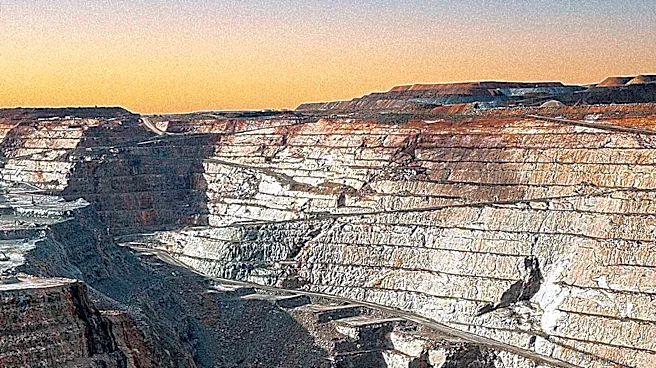
BHP, in collaboration with Rio Tinto and Caterpillar, has commenced trials of two Cat 793 XE Early Learner battery-electric haul trucks at the Jimblebar iron ore mine in the Pilbara region of Western Australia. This initiative is part of a broader effort
to explore the potential for reducing greenhouse gas emissions in large-scale mining operations. The trucks have been operational for over 100 hours, completing more than 200 test laps. The data collected from these trials will be used to assess the technical readiness, infrastructure needs, and commercial viability of integrating battery-electric haul trucks into mining operations. The project also includes testing static and dynamic charging technologies, with plans to evaluate a dynamic charging system that recharges trucks while in motion.
Why It's Important?
The trial of electric haul trucks by BHP and its partners represents a significant step towards decarbonizing the mining industry, which is traditionally a major source of greenhouse gas emissions. By investing in battery-electric technology, BHP aims to achieve a 30% reduction in operational emissions by fiscal year 2030, aligning with global efforts to combat climate change. The success of this trial could pave the way for widespread adoption of electric vehicles in mining, potentially transforming industry practices and reducing environmental impact. This initiative also highlights the growing collaboration between mining companies and equipment manufacturers to develop sustainable solutions, which could influence future regulatory standards and industry benchmarks.
What's Next?
Following the initial phase of testing, the next stage will focus on evaluating a dynamic charging system designed to recharge the trucks while they are in motion. This advancement could significantly enhance the efficiency and practicality of electric haul trucks in mining operations. The outcomes of these trials will inform BHP's strategy for scaling battery-electric technology across its operations, potentially leading to further investments in infrastructure and technology development. The trial's progress will be closely monitored by industry stakeholders, as its success could set a precedent for similar initiatives worldwide, influencing the future of mining and its environmental footprint.