






What's Happening?
The Fitbit Edge, priced at $180, is presented as a health and fitness tracker that aims to offer a more streamlined experience compared to full-featured smartwatches. It includes core functionalities such as manual tracking for up to 50 workout profiles,
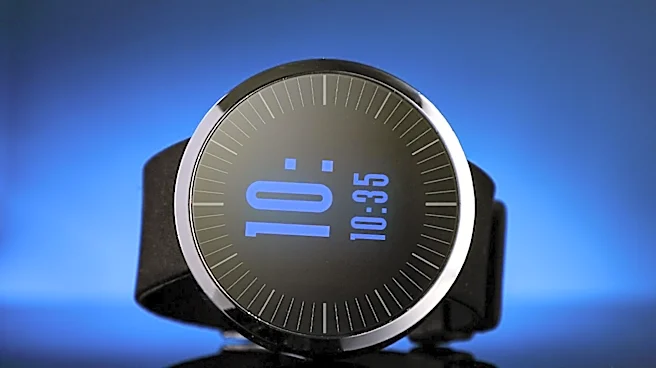
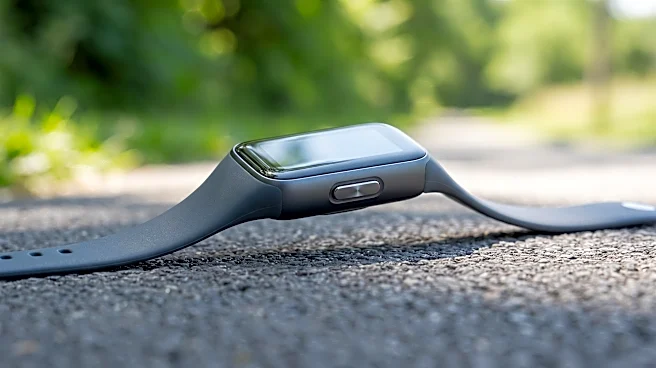
automated recognition for up to 100 workouts, built-in GPS with 40% improved tracking, an altimeter, and integration with Google Health’s AI Coach for automated reports and insights. The device also features Health Guardian integration for detailed health tracking, skin temperature sensors for sleep tracking, and promises a 7-day battery life with fast charging capabilities. However, a significant limitation highlighted in reviews is the absence of NFC support for contactless payments and the inability to make or receive calls directly from the device. Other missing features include loss of pulse detection, EDA scan capabilities, and Satellite SOS. The design incorporates recycled aluminum, a Hybrid OLED display, and interchangeable bands, with a user-replaceable battery system.
Why It's Important?
The Fitbit Edge's positioning in the market as a health and fitness tracker without NFC or call functions at a $180 price point is significant for consumers evaluating wearable technology. For individuals prioritizing comprehensive health data and fitness tracking over smartwatch conveniences like contactless payments and direct communication, the Edge could be a viable option. However, the lack of these features, which are increasingly standard in many smartwatches, might be a dealbreaker for others. This product strategy by Google, which owns Fitbit, suggests a segmentation of the wearable market, focusing on a niche that values core health tracking and battery life over a broader suite of 'smart' functionalities. The user-replaceable battery system is also a notable move, potentially appealing to environmentally conscious consumers and those seeking longer device longevity, contrasting with the trend of sealed units in many modern electronics.
What's Next?
The market reception of the Fitbit Edge will likely influence Google's future product development in the wearable space. If the device finds success among users who prioritize dedicated health and fitness tracking and are willing to forgo NFC and call functions, it could solidify a market segment for more specialized, less 'smart' wearables. Conversely, if consumer demand for integrated features remains high, Google might need to re-evaluate its strategy for subsequent Fitbit models, potentially incorporating more smartwatch functionalities or adjusting pricing to better reflect the feature set. The emphasis on Google Health's AI Coach suggests a continued push towards data-driven health insights, which could see further integration and enhancement in future iterations of Fitbit devices and the broader Google Health ecosystem.
Beyond the Headlines
The design philosophy behind the Fitbit Edge, particularly its omission of features like NFC and call capabilities, reflects a broader industry discussion about the essential functions of wearable technology. In an era where many devices strive to be all-encompassing, the Edge's focused approach could signal a return to core utility for some users. This could also influence consumer expectations, potentially leading to a clearer distinction between dedicated fitness trackers and full-fledged smartwatches. The inclusion of a user-replaceable battery system is a progressive step towards sustainability and reparability, challenging the planned obsolescence often seen in consumer electronics. This move could set a precedent for other manufacturers, encouraging more eco-friendly design practices and offering consumers greater control over the lifespan of their devices.