






What's Happening?
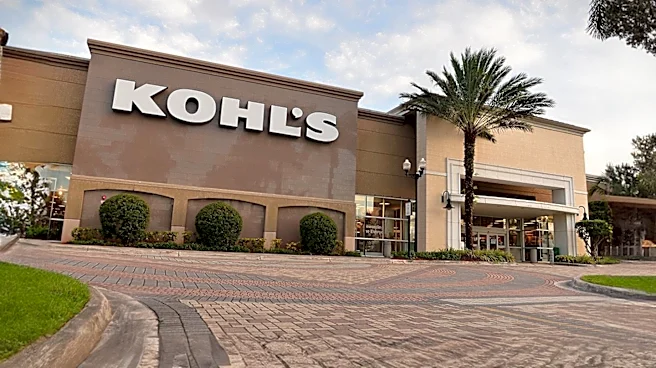
Kohl's (NYSE:KSS), a prominent U.S. department store retailer, is currently under renewed market scrutiny following a neutral rating update from BTIG Research. This assessment comes after the company reported quarterly financial figures that surpassed
previous market estimates. Kohl's operates a nationwide network of physical department stores complemented by digital commerce channels, offering a diverse range of merchandise including apparel, footwear, accessories, beauty products, and home furnishings. Despite the stronger-than-anticipated quarterly performance, the company's sales did experience a decline compared to the same period in the prior year, indicating a mixed retail environment. The retailer's business model is characterized by its broad product mix, which includes national brands and private-label merchandise, and its strategic integration of Sephora shop-in-shop locations and online beauty offerings to expand its market presence beyond traditional department store categories. The discussion around Kohl's centers on its operational performance, adaptation to changing consumer behavior, and market valuation within the competitive consumer retail space.
Why It's Important?
The performance of Kohl's is a significant indicator for the broader U.S. consumer discretionary sector and the department store retail model. A neutral rating, coupled with better-than-expected quarterly results, suggests that while the company is navigating a challenging retail landscape effectively in some areas, it still faces underlying pressures. The decline in year-over-year sales, despite exceeding estimates, highlights the ongoing shifts in consumer spending patterns and the competitive intensity within the retail industry. Kohl's diversified merchandise assortment, including its expansion into beauty with Sephora, is crucial for its relevance and ability to attract various customer segments. The company's blend of physical stores and digital commerce is a key strategy for engaging customers and adapting to evolving shopping preferences. This situation impacts investors, suppliers, and employees, as it reflects the health of a major retail player and its capacity to maintain market share and profitability in a dynamic economic environment. The ability of Kohl's to manage inventory, optimize merchandise selection, and enhance customer engagement will be critical for its sustained success.
What's Next?
Kohl's will likely continue to focus on refining its omnichannel strategy, integrating its physical stores with its digital platforms to provide a seamless customer experience. The company's efforts to diversify its product offerings, particularly through partnerships like Sephora, are expected to continue as it seeks to attract new customer demographics and increase basket sizes. Future quarterly disclosures will be closely watched to assess the company's ability to sustain its operational performance and address the year-over-year sales declines. Stakeholders, including investors and market analysts, will be looking for signs of consistent growth in key merchandise categories and improved store productivity. The broader retail environment, influenced by consumer spending trends and economic conditions, will also play a significant role in shaping Kohl's trajectory. The company's management will need to demonstrate effective inventory management and strategic marketing to navigate competitive pressures and capitalize on evolving consumer demands.
Beyond the Headlines
The situation at Kohl's reflects a broader transformation occurring within the U.S. retail sector, where traditional department stores are grappling with the rise of e-commerce and changing consumer expectations. The emphasis on a diversified merchandise mix and strategic partnerships, such as the one with Sephora, underscores the necessity for retailers to innovate beyond their core offerings to remain competitive. This shift highlights a move towards experiential retail and curated product assortments that cater to specific consumer needs and preferences. The ongoing challenge for Kohl's, and similar retailers, is not just about sales figures but about redefining their value proposition in an increasingly fragmented market. The company's ability to blend physical and digital experiences, while maintaining a strong brand identity, will be crucial for its long-term viability. This evolution also has implications for urban planning and commercial real estate, as the role and footprint of large department stores continue to adapt to new retail realities.